
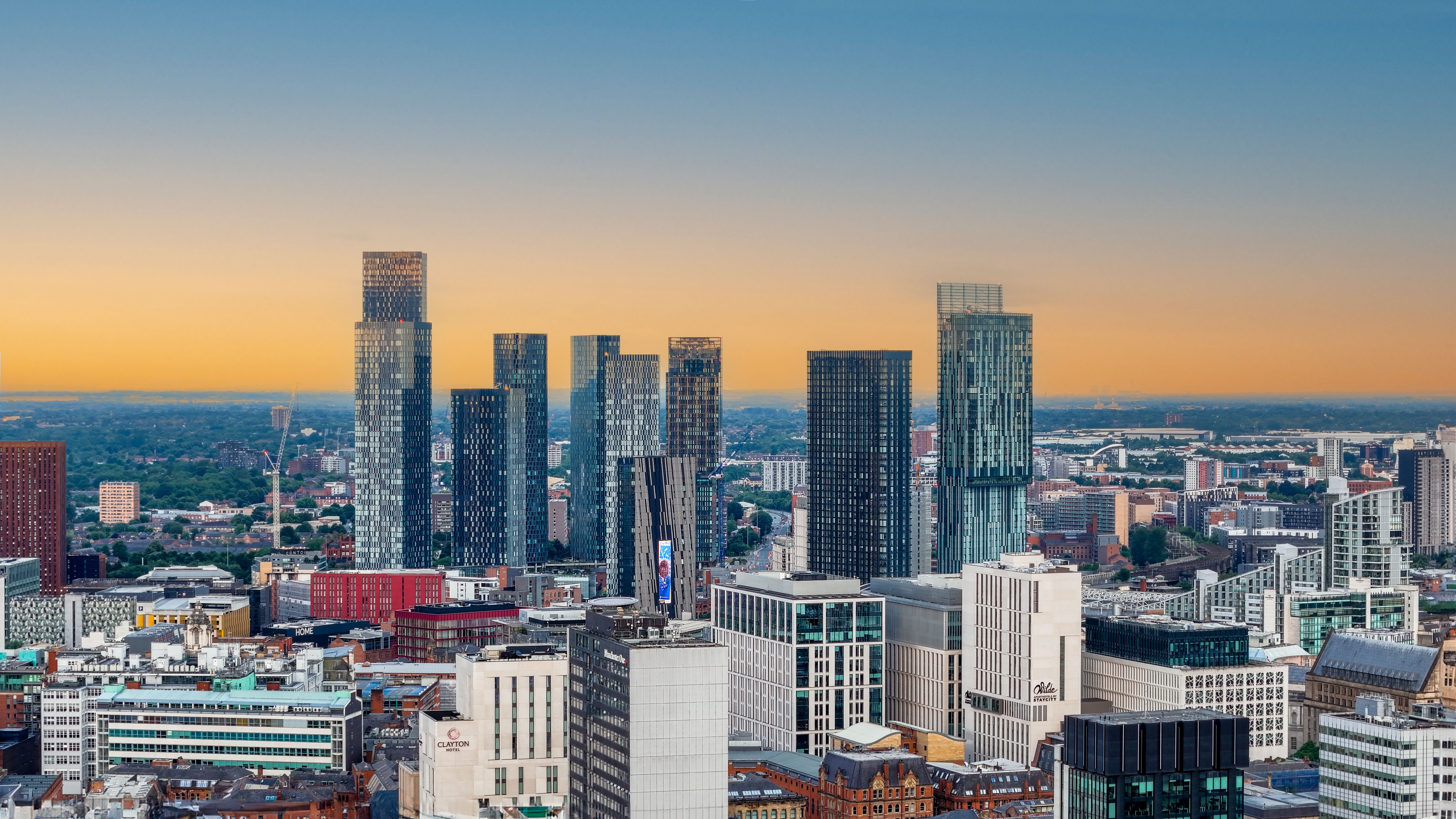
Discover the technology trends transforming Manchester businesses in 2026, from AI and automation to cybersecurity, cloud technology and smarter websites.
Manchester Is Becoming an AI Powerhouse
Manchester has always had a strong relationship with technology, but in 2026 the pace of change is becoming impossible for businesses to ignore.
Artificial intelligence is moving beyond experimentation and becoming part of everyday business operations. Manchester Digital’s latest sector research describes a shift from AI hype towards practical applications in products, services, productivity and day-to-day operations.
And Manchester is particularly well positioned for that change.
Greater Manchester’s AI sector has reached a reported valuation of $4.7 billion, following 9% growth in 2026. The region has attracted almost $1 billion in cumulative AI investment since 2010 and is home to approximately 13,500 AI professionals.
So what does this actually mean for businesses in Manchester?
Here are seven technology trends we believe will matter most.
1. AI Is Moving Into Everyday Business
The biggest technology story of 2026 isn’t simply that businesses are interested in AI.
It’s that businesses are beginning to use it properly.
AI can now assist with customer enquiries, content workflows, internal administration, data analysis, sales processes and repetitive business tasks.
For Manchester SMEs, this creates an important question:
Where are your staff spending time on work that technology could help them complete faster?
The businesses that benefit most from AI won’t necessarily be those using the most tools. They’ll be the ones that identify useful applications and integrate them into genuine business processes.
2. Websites Are Becoming Smarter
A business website used to be largely a digital brochure.
That’s changing.
Modern websites can connect with CRMs, booking platforms, payment systems, analytics, automated workflows and AI-powered services.
Customers also expect considerably more.
They want fast websites, excellent mobile experiences, clear information and an easy route from arriving on a page to taking action.
For businesses investing in web development in Manchester, the conversation is therefore shifting from:
“What should our website look like?”
to:
“What should our website actually do for the business?”
That is a much more valuable question.
3. Cybersecurity Is Becoming a Business Issue, Not Just an IT Issue
As companies become more digitally connected, their exposure to cyber threats increases.
AI is also changing cybersecurity itself. Attackers can increasingly automate elements of reconnaissance, social engineering and other malicious activity, while defenders are turning towards continuous monitoring and stronger identity controls.
Manchester businesses should therefore think beyond simply installing antivirus software.
Security increasingly involves websites, cloud platforms, passwords, employee access, backups, email systems, suppliers and customer information.
For SMEs in particular, good cybersecurity should be designed into their technology rather than added after something goes wrong.
4. Automation Will Quietly Transform Small Businesses
Not every important technology trend comes with a robot or a dramatic AI demonstration.
Some of the biggest improvements are remarkably simple.
Imagine a customer completes an enquiry form.
Instead of somebody manually copying the details into different systems, technology can potentially:
Website enquiry → CRM → notification → follow-up → task → reporting
The customer sees a straightforward form.
Behind it, several administrative jobs have disappeared.
For small businesses with limited teams, that can be enormously valuable.
5. Cloud Technology Is Becoming the Default
Cloud computing is already established, but its importance continues to grow as companies connect more of their operations digitally.
Research published in 2026 examining digital transformation across Greater Manchester looked at technologies including AI, big data, cloud computing, IoT and robotics. Importantly, the research found that simply adopting technology isn’t enough: businesses need the relevant digital skills to translate those investments into productivity improvements.
That distinction matters.
Buying software isn’t digital transformation.
Using technology to improve the way the company operates is.
6. Mobile Experience Matters More Than Ever
Customers don’t patiently navigate bad websites anymore.
If a page is confusing, slow or awkward on a phone, moving to a competitor takes seconds.
That’s why mobile design shouldn’t mean taking a desktop website and simply making everything smaller.
Navigation, buttons, typography, forms, imagery and calls to action should all be designed around the smaller screen.
For local Manchester businesses competing through Google Search, that customer experience can directly influence whether website traffic turns into enquiries.
7. Human Skills Will Still Decide Who Wins
Perhaps the most interesting part of the AI boom is that technology isn’t eliminating the importance of people.
It’s increasing the importance of people who know how to use technology effectively.
Manchester Digital’s 2026 research highlights skills, talent attraction and retention alongside AI adoption as major issues affecting the region’s technology sector.
The strongest businesses are therefore unlikely to be completely automated organisations.
They’ll combine human judgement, creativity and relationships with technology that removes unnecessary work.
What Does This Mean for Manchester Businesses?
The temptation with every new technology trend is to think:
“We need AI.”
That’s the wrong starting point.
Start with the business problem.
Where are customers dropping out?
Which processes take too long?
What are employees repeatedly doing manually?
Is the website generating enough enquiries?
Are different systems disconnected?
Where is money or time being wasted?
Once those questions are answered, the right technology becomes much easier to identify.
Manchester’s Next Technology Chapter Has Already Started
Manchester isn’t waiting for the AI economy to arrive.
It’s already participating in it.
The city recorded 655 AI businesses in the 2026 SAS AI Cities Index, and Greater Manchester continues to attract investment across AI, software and digital technologies.
For local businesses, however, the opportunity isn’t about following every technology trend.
It’s about choosing technology that makes the business faster, smarter, safer and easier for customers to deal with.
At Hivebyte Technology Ltd, we help businesses turn digital ideas into practical solutions — from websites and digital platforms to technology that supports how a company grows.
Planning your next digital project in Manchester? Talk to our team about what we can build for your business.