Webdesign

HOW DIGITAL TOOLS AND AI ARE CHANGING UK BUSINESS

Across the UK, businesses are looking for ways to serve customers faster while keeping costs under control. Digital tools and AI can help, but the biggest benefit comes from choosing tools that solve a real problem.

Think about the time spent answering the same enquiries, copying customer details between systems or searching for an update on an order. A well-designed website can answer common questions and let customers contact you at any hour. A CRM can keep customer information and follow-up tasks in one place. AI can help draft responses or sort information, giving your team more time for work that needs a personal touch.

That is why more businesses are going digital. When routine steps take less time, staff can focus on customers, sales and decisions. Better organised information can also reduce duplicated work and make costs easier to manage. The savings depend on choosing the right tools and using them well.

A web developer plays an important part in that process. Your website should make it easy for people to understand what you offer and take the next step. It may also need to work with the systems your team uses every day. An experienced web developer can help you decide what to build first, based on what your business actually needs.

At Hivebyte Technology Ltd, we believe digital systems should fit the business using them. Whether you need a clearer website, a bespoke CRM or a more efficient way to handle enquiries, the starting point is understanding where your team loses time.

AI and digital tools will continue to change how UK businesses work. You do not need to change everything at once. Start with one task that slows your team down, find a practical way to improve it and build from there. Hivebyte Technology Ltd can help you turn that first step into a digital setup that supports your business as it grows.

CRM SYSTEM UK

A BESPOKE CRM SYSTEM BUILT FOR YOUR UK BUSINESS

Buying a good CRM system in the UK should be a straightforward choice. Your business needs a clear way to manage customer details, follow up on enquiries and keep work moving. Yet an off-the-shelf system can leave your team adapting its processes to fit the software. When Hivebyte Technology Ltd builds your CRM, we tailor it to the way your business works. From the information you need to track to the tasks you want to simplify, the goal is a practical system your team can use with confidence. You get a CRM designed around your customers, your team and your plans for growth.

A bespoke CRM can bring contacts, sales opportunities and everyday tasks into one place. It can help your team see what needs attention and give customers a more consistent experience.

At Hivebyte Technology Ltd, we start by understanding how your business operates. We then develop a CRM system around your needs, whether that means managing leads, organising client records or making routine work easier.

If you are looking at developing a CRM system in the UK, choose one built to support the way you actually work. A tailored system gives your business a useful foundation as its needs change.

Social Media Graphic 1 Large

WHY GOOD SOCIAL MEDIA WITHOUT A PROFESSIONAL WEBSITE IS LIMITING YOUR BUSINESS GROWTH

SOCIAL MEDIA ALONE IS NOT ENOUGH TO FIND NEW CUSTOMERS

In 2026, businesses across the UK invest heavily in social media marketing, believing that Facebook, Instagram and TikTok are enough to attract customers. However, without a professional website, your business could be missing valuable opportunities.

At Hivebyte Technology, we understand that social media creates awareness, but a Manchester web designer helps transform that attention into genuine enquiries and customers.

A Manchester web designer at Hivebyte Technology creates professional websites that support your marketing and improve your online visibility throughout the UK.

WHY YOUR BUSINESS NEEDS MORE THAN SOCIAL MEDIA

Social media platforms control how many people see your content. Even with thousands of followers, your posts may reach only a small percentage of your audience.

A Manchester web designer can help establish your business beyond social media.

Hivebyte Technology develops websites that give businesses greater control over their online presence.

With a Manchester web designer, your customers can find your services through Google searches rather than relying entirely on social media algorithms.

Hivebyte Technology combines professional website design with digital marketing strategies to help UK businesses build lasting online visibility.

YOUR WEBSITE IS YOUR DIGITAL SHOPFRONT

Your social media attracts attention, but your website should turn that attention into business.

A Manchester web designer understands how professional website design influences customer confidence.

At Hivebyte Technology, we believe every UK business deserves a website that communicates professionalism, credibility and trust.

A Manchester web designer creates clear navigation, mobile-friendly pages and effective contact forms.

Hivebyte Technology ensures your website represents your brand and makes it easier for potential customers to contact you.

Without a professional website, even excellent social media marketing can struggle to convert visitors into paying customers.

SEO HELPS CUSTOMERS DISCOVER YOUR BUSINESS

Search engine optimisation is essential for UK businesses competing online.

A Manchester web designer can develop SEO-friendly website structures that help search engines understand your services.

Hivebyte Technology focuses on website performance, relevant keywords, mobile responsiveness and clear content.

Working with a Manchester web designer allows your business to target customers searching for your services in Manchester and across the UK.

Hivebyte Technology combines SEO, website design and digital marketing to create a stronger foundation for sustainable business growth.

HIVEBYTE TECHNOLOGY: YOUR LONG-TERM DIGITAL PARTNER

Social media and professional websites should work together, not compete.

At Hivebyte Technology, our Manchester web designer services help UK businesses connect social media engagement with an effective website.

Hivebyte Technology understands that a professional online presence requires more than attractive social media posts.

Our Manchester web designer approach focuses on visibility, usability and customer enquiries.

Whether you are starting a new company or expanding an established UK business, Hivebyte Technology provides website design and digital marketing support.

Your social media attracts attention. Your website builds trust. Together, they help turn visitors into customers.

Contact Hivebyte Technology today and discover how a Manchester web designer can help strengthen your online presence.

 
Manchester

WHY MANCHESTER BUSINESSES ARE LOSING CONTROL OF THEIR TECHNOLOGY IN 2026

HOW POOR WEBSITE SECURITY, OUTDATED SYSTEMS AND WEAK DIGITAL STRATEGIES ARE PUTTING UK BUSINESSES AT RISK

In 2026, businesses across Manchester and the UK are facing a growing problem. Outdated technology, poor website security and unreliable digital systems are leaving companies vulnerable to cyberattacks, lost customers and financial difficulties.

At Hivebyte Technology Ltd, we understand that technology should give business owners control, not create additional problems. Our approach to web design Manchester helps businesses establish secure, professional and reliable digital foundations.

THE HIDDEN DANGERS OF OUTDATED BUSINESS TECHNOLOGY

Many businesses continue operating with outdated websites, weak passwords, unsupported software and inadequate security measures.

Without professional web design Manchester, companies risk exposing customer information, experiencing website downtime and losing control of their online operations.

A poorly maintained website can damage customer confidence, reduce search engine visibility and create opportunities for cybercriminals.

Hivebyte Technology Ltd believes that investing in web design Manchester should involve more than creating an attractive website. It should include reliable hosting, regular updates, secure systems and long-term digital protection.

WHY WEBSITE SECURITY MATTERS MORE THAN EVER IN 2026

Cybersecurity is no longer a concern exclusively for large corporations. Small businesses, independent retailers and growing companies can also experience phishing attacks, compromised accounts and website security breaches.

Professional web design Manchester can help businesses establish stronger digital foundations through secure website development, HTTPS encryption, regular backups and ongoing maintenance.

At Hivebyte Technology Ltd, we recognise that web design Manchester must combine usability, performance and security to support sustainable business growth.

Without appropriate protection, businesses risk losing access to important information, experiencing operational disruption and damaging relationships with customers.

HOW POOR TECHNOLOGY CAN COST BUSINESSES CUSTOMERS

A slow, outdated or insecure website can discourage potential customers before they even contact your business.

Investing in web design Manchester helps companies improve their online presence, provide better customer experiences and establish credibility in an increasingly competitive marketplace.

Hivebyte Technology Ltd provides web design Manchester services alongside digital marketing solutions to help businesses build professional online platforms.

Effective web design Manchester also supports mobile responsiveness, search engine optimisation and clear customer communication.

For Manchester businesses, maintaining control over digital technology means understanding who manages their website, where their data is stored and how their systems are protected.

TAKE CONTROL OF YOUR BUSINESS TECHNOLOGY WITH HIVEBYTE TECHNOLOGY LTD

Businesses should not wait until a website fails or a security incident occurs before reviewing their digital infrastructure.

Hivebyte Technology Ltd helps companies strengthen their online presence through professional web design Manchester, website development and digital marketing.

Whether you operate a small local business or a growing UK company, investing in web design Manchester can support your long-term digital strategy.

With Hivebyte Technology Ltd, your business can focus on growth while building a more secure, reliable and professional online presence.

DON’T LET OUTDATED TECHNOLOGY HOLD YOUR BUSINESS BACK IN 2026.

Contact Hivebyte Technology Ltd today to discuss web design Manchester and discover how a stronger digital foundation can support your business.

Screenshot 2026-09-18 104056

HOW HIVEBYTE TECHNOLOGY HELPED SMART AUCTION UK REACH NUMBER ONE ON GOOGLE WITHOUT RELYING ON PAID ADS

Why spend thousands of pounds on Google Ads when a professionally designed website and a strong organic SEO strategy can help your business attract customers naturally?

At HiveByte Technology Ltd, we believe your website should be more than an online presence. It should be a powerful business tool that attracts visitors, generates enquiries and supports long-term growth.

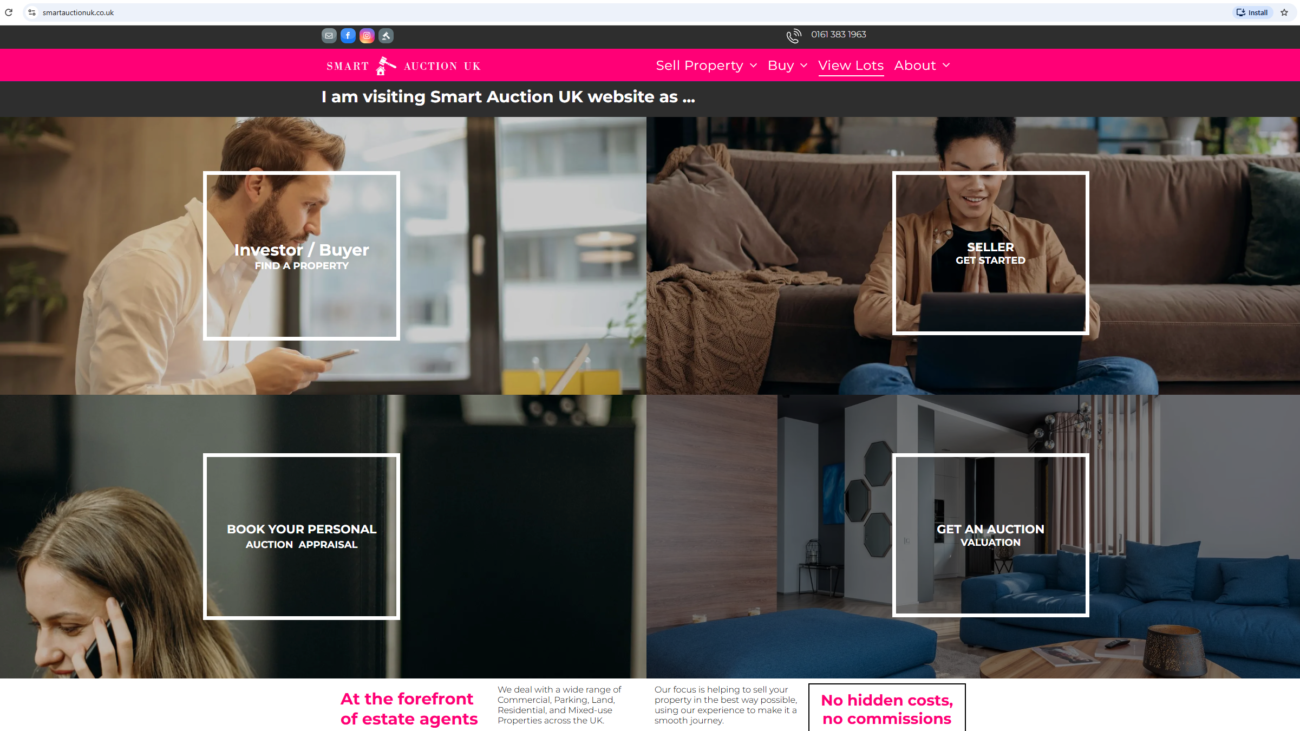
Our work with Manchester-based Smart Auction UK demonstrates what can be achieved when professional web design, technology and search engine optimisation work together.

SMART AUCTION UK: A MANCHESTER BUSINESS SUCCESS STORY

Smart Auction UK is a property auction company with its headquarters in Greater Manchester, helping customers buy and sell properties across the United Kingdom.

HiveByte Technology Ltd designed and developed its website, integrating it with the company's back-office system and supporting its online visibility.

According to Smart Auction UK's customer review, the website reached number one on Google across the UK in under six months.

This result demonstrates the potential of combining professional website development with a focused digital strategy.

WHY PAY FOR GOOGLE ADS WHEN ORGANIC SEO CAN GENERATE LEADS?

Google Ads can provide immediate visibility, but businesses pay for advertising traffic. Once advertising campaigns stop, the paid traffic stops too.

Organic SEO takes a different approach.

By developing a fast, mobile-friendly website with relevant content, clear navigation and effective search optimisation, businesses can attract customers who are actively searching for their services.

Organic traffic does not require paying Google for every click. However, achieving and maintaining strong rankings requires investment in website development, SEO and ongoing improvements.

For businesses seeking sustainable growth, a strong organic presence can reduce dependence on paid advertising.

YOUR WEBSITE SHOULD GENERATE ENQUIRIES, NOT JUST LOOK GOOD

A successful business website needs to turn visitors into potential customers.

At HiveByte Technology Ltd, we focus on professional website design, mobile optimisation, SEO, user experience and clear customer enquiry pathways.

Whether your business operates in Manchester, Liverpool, Birmingham, Leeds, London or anywhere across the UK, your website should help customers discover your services and contact you easily.

BUILD YOUR BUSINESS WITH HIVEBYTE TECHNOLOGY LTD

The Smart Auction UK project highlights how investing in the right website and digital strategy can support organic search visibility and business growth.

At HiveByte Technology Ltd, we provide professional web design, SEO, digital marketing and technology solutions for businesses across the UK.

Stop relying entirely on paid advertising. Invest in a website designed to attract customers and generate enquiries through organic search.

Contact HiveByte Technology Ltd today and discover how we can help your business grow online.

Digital website market

WHY SOME UK BUSINESSES ARE LOSING CUSTOMERS WHILE OTHERS ARE GAINING THEM

Every day, businesses across the UK compete for the same thing: the customer’s attention. Yet while some companies are gaining new enquiries, increasing sales and building stronger brands, others are wondering where their customers have gone.

The difference is not always price, location or experience. Increasingly, it comes down to technology and digital presence.

Customers now expect to find businesses quickly online. They want a professional website, clear information, fast loading speeds and an easy way to make contact. If they don’t get that experience, a competitor is only a click away.

YOUR WEBSITE CAN WIN OR LOSE A CUSTOMER

Your website is often the first impression a potential customer gets of your company.

An outdated website, broken pages, poor mobile design or confusing navigation can make an established business appear behind the times. A modern website should make customers feel confident about contacting you.

It should be fast, professional, mobile-friendly and built around the needs of your customers.

At HiveByte Technology Ltd, we believe a website should be more than an online brochure. It should work as a tool for generating enquiries and supporting business growth.

IF CUSTOMERS CAN’T FIND YOU, THEY CAN’T CHOOSE YOU

Having a great website is only part of the solution.

When someone searches Google for a product or service, your business needs the best possible chance of appearing in front of them. This is where SEO, local search optimisation and digital marketing become important.

Your competitors may not necessarily provide a better service. They may simply be easier to find online.

5 UK AREAS WHERE BUSINESSES CAN IMPROVE THEIR TECHNOLOGY

Manchester – Strong websites, local SEO and digital marketing can help businesses increase their visibility across Greater Manchester.

Liverpool – Modern web design, online marketing and stronger branding can help local businesses reach more potential customers.

Birmingham – Companies can improve their digital customer experience through faster websites, mobile optimisation and better online communication.

Leeds – Automation, modern websites and digital business tools can help companies save time and improve customer enquiries.

Sheffield – Businesses can strengthen their online presence through improved websites, SEO and digital marketing strategies.

CUSTOMERS EXPECT MORE FROM BUSINESSES TODAY

People are used to fast technology. They shop, bank, book appointments and communicate from their phones.

That means businesses need to make things simple.

A customer should not have to search around your website for a telephone number, wait for slow pages to load or struggle to understand what services you provide.

Every unnecessary obstacle gives them another reason to leave.

DON’T GIVE YOUR NEXT CUSTOMER TO YOUR COMPETITOR

Technology is no longer something only large companies need.

Small and medium-sized businesses can use professional websites, SEO, digital marketing and smarter technology to compete, attract customers and build stronger brands.

HiveByte Technology Ltd helps businesses create a stronger digital presence through web design, digital marketing and technology solutions.

Your next customer could already be searching online.

MAKE SURE YOUR BUSINESS IS THE ONE THEY FIND.

Web designers and marketing in Manchester

Greater Manchester Is Moving Fast But Are Local Businesses Keeping Up With Technology?

Manchester and the North West are developing rapidly as technology and digital business grow, but many businesses across Rochdale, Oldham, Stockport, Sale, Bury and Bolton are still being held back by outdated websites and weak digital marketing. Discover why now is the time to modernise.

Manchester and the wider North West are changing.

Technology businesses are growing. New developments are appearing across the region. Artificial intelligence is becoming part of everyday business. Customers are increasingly searching online before deciding who to contact, and companies are using automation, CRM systems, digital marketing and better websites to compete more effectively.

But this transformation is not happening at the same speed everywhere.

Across Manchester, Rochdale, Oldham, Stockport, Sale, Bury, Bolton and the surrounding areas, there are thousands of established businesses providing excellent products and services.

Many have strong reputations built over decades.

Yet some are still operating digitally as though the way customers find businesses has not changed.

Their website may be several years old.

Their Google presence may be weak.

There may be no clear marketing strategy.

Enquiries arrive through different channels without proper tracking.

Social media is updated occasionally rather than strategically.

Customer information remains scattered across emails and spreadsheets.

And sometimes there is still a belief that:

“Our business has always grown through recommendations. We don’t really need digital marketing.”

That approach may have worked extremely well in the past.

But the market around these businesses is changing.

At Hivebyte Technology Ltd, we believe this creates one of the biggest opportunities for businesses across Greater Manchester.

The objective is not to replace what already works.

It is to combine traditional business experience with modern technology and marketing.

Manchester Is Becoming Increasingly Digital

Manchester has developed into one of the UK’s major regional centres for digital and technology businesses.

But the impact of technology goes much further than companies that actually sell software.

Technology is changing construction.

Manufacturing.

Professional services.

Property.

Recruitment.

Retail.

Hospitality.

Healthcare.

Transport.

Trades.

Finance.

And almost every other sector operating across the region.

A business does not need to become a technology company to benefit from technology.

A builder can have a better enquiry and quotation system.

An accountant can automate appointment processes.

A manufacturer can improve customer and operational data.

A solicitor can make it easier for potential clients to find and understand services.

A retailer can improve its online presence.

A professional services company can use a CRM to prevent opportunities from being forgotten.

The question is not:

“Are we a technology business?”

It is:

“Could technology make our business better?”

For most organisations, the answer deserves serious consideration.

The Digital Gap Between Local Businesses Is Becoming Obvious

Take two businesses offering similar services in Greater Manchester.

The first has operated successfully for 25 years.

Its website was built six years ago.

It looks dated on a mobile phone. The services are difficult to understand. There are few recent updates and no clear reason why a potential customer should choose the company.

The second business may be considerably younger.

But its website is fast, modern and professional.

It appears prominently when customers search.

It publishes useful content.

Its Google presence is maintained.

Reviews reinforce trust.

Visitors immediately understand the services.

Enquiries are connected to a CRM.

Potential customers receive quick responses and structured follow-up.

Which company is better?

We cannot know from its website alone.

But that isn’t necessarily what the potential customer sees.

The customer sees the company that has made itself easier to discover, understand and trust.

That difference can influence who receives the enquiry.

Rochdale Businesses Have an Opportunity to Modernise

Rochdale has a long history of entrepreneurship, manufacturing and independent business.

Many established companies have grown through relationships, repeat customers and recommendations.

Those strengths should not disappear.

But digital technology can amplify them.

Imagine a business with an excellent reputation that has spent 20 years building customer trust.

A strong website can take that reputation and present it to thousands of people who have never previously heard of the company.

Good search visibility can introduce the business to customers actively looking for its services.

Digital marketing can keep the company visible.

CRM technology can help manage the opportunities that follow.

The objective is not to abandon traditional business.

It is to make traditional business stronger digitally.

Oldham Businesses Cannot Depend Entirely on Reputation

The same applies across Oldham.

Reputation is enormously valuable.

But there is a difference between having a good reputation and making that reputation visible.

A potential customer who has never dealt with your business does not automatically know that you have served the area for 30 years.

Your website needs to tell them.

Your content needs to demonstrate your knowledge.

Your reviews can provide evidence.

Your case studies can show your experience.

Your digital presence should communicate the quality that existing customers already understand.

Otherwise, decades of expertise can be almost invisible to somebody discovering the business for the first time.

Stockport Is Moving Quickly

Stockport is experiencing significant development and business activity.

For businesses operating there, this creates opportunity — but also competition.

As areas develop, new businesses enter the market.

Newer companies often begin with digital technology already built into their operations.

They do not need to replace an old website because they never had one.

They may start with a modern CRM.

They may use cloud technology immediately.

They may build marketing around search, social media and digital content from day one.

An established Stockport company therefore has an interesting advantage and disadvantage.

It has experience, customers, knowledge and reputation.

But a newer competitor may have better digital infrastructure.

The strongest position is to have both:

experience + modern technology.

Sale Businesses Are Competing for Digitally Aware Customers

Sale and the wider Trafford area contain a mixture of established businesses, professional services, independent companies and growing organisations.

Customers in these markets frequently research before contacting a business.

They compare.

They read.

They search.

They look at websites.

They examine reviews.

They check social media.

And increasingly, they expect the digital experience to reflect the quality of the company.

If your website says your company provides a premium service but the website itself feels neglected, customers notice the contradiction.

Your digital presence should reinforce your business positioning, not undermine it.

Bury Businesses Should Think Beyond Social Media

One mistake we see in digital marketing is treating social media as the entire strategy.

A Bury business might post regularly on Facebook, Instagram or LinkedIn and understandably believe it is actively marketing online.

But social media is only one part of the picture.

What happens after someone sees the post?

Where do they go?

Does the website build confidence?

Can they find the service they need?

Is there a strong call to action?

Can the business capture the enquiry?

Does anyone know which marketing produced that customer?

Is the lead followed up?

A strong digital strategy connects the pieces.

Marketing → Website → Enquiry → CRM → Follow-up → Customer.

That is considerably more powerful than simply generating likes.

Bolton Businesses Should Not Underestimate Search

Bolton has a substantial and diverse business community.

For many local companies, Google and other search experiences can represent an important route to customers.

Someone searches for a service.

Several businesses appear.

The customer starts comparing them.

At this point, your website becomes part of your sales process whether you planned for it or not.

If the website loads slowly, looks outdated or provides very little useful information, the visitor can leave within seconds.

There is no salesperson available to explain:

“Actually, we’re much better than our website makes us look.”

The opportunity may already be gone.

Your Website Is Your Digital Premises

Businesses spend significant amounts making their physical premises presentable.

Signs are maintained.

Reception areas are cleaned.

Vehicles are branded.

Employees wear appropriate clothing.

Offices are designed to create the right impression.

But sometimes the website — which potentially receives far more first-time visitors than the physical reception — receives very little attention.

Think about your website as your digital premises.

Would you invite an important potential customer into an office that had not been maintained for seven years?

Probably not.

Yet that is effectively what happens when customers arrive at an outdated website.

The North West Technology Economy Creates a Bigger Opportunity

The growth of technology across Manchester and the wider North West should not benefit only software companies.

It creates an ecosystem from which ordinary businesses can benefit.

Better connectivity.

Digital skills.

Technology providers.

Cloud platforms.

AI.

Automation.

Data analytics.

Modern marketing technology.

Sophisticated websites.

CRM systems.

Many technologies that were once practical mainly for larger corporations are now accessible to SMEs.

That changes the competitive landscape.

A relatively small company can build an impressive digital operation without employing a huge IT department.

AI Will Make the Difference Even Greater

Artificial intelligence is accelerating this transformation.

But local businesses should not feel pressured to use AI simply because it is fashionable.

The correct question is:

Where could AI genuinely improve this business?

Perhaps it helps employees find information.

Perhaps it assists with routine communications.

Perhaps it helps analyse customer data.

Perhaps it reduces administrative work.

Perhaps it supports marketing or customer service.

But businesses need the foundations first.

A good website.

Organised customer data.

Clear processes.

Appropriate systems.

Cybersecurity.

A sensible digital strategy.

AI becomes far more useful when it sits on top of a business that is already digitally organised.

Businesses That Wait Could Find Catching Up More Expensive

This is where the issue becomes urgent.

A business does not stand still simply because it chooses not to invest in technology.

Its competitors continue moving.

Imagine Company A improves its website this year.

It begins producing useful content.

That content gradually builds visibility.

More enquiries enter its CRM.

The business collects better customer data.

It introduces automation.

Employees save time.

Management gets better reporting.

It then starts introducing AI into selected processes.

Company B does nothing for three years.

When Company B finally decides to modernise, it is not simply one website behind.

It may be several years of digital development behind.

That is why delaying digital transformation can create what we might call digital debt.

The longer the business waits, the more there may eventually be to fix.

Good Marketing Is Not About Shouting Louder

Marketing sometimes has a bad reputation among traditional businesses.

That is understandable.

Poor marketing can feel intrusive, expensive and difficult to measure.

Good marketing is different.

It starts by understanding customers.

What are they looking for?

What problems do they have?

Why should they trust your business?

Where do they look for information?

What questions do they ask before buying?

Then you create a digital presence that answers those questions.

Marketing should not simply tell everyone:

“BUY FROM US.”

It should give the right people a reason to discover, understand and trust the business.

Local Knowledge Still Matters

Technology does not remove the importance of being local.

In many industries, it makes local relevance more valuable.

A customer searching for a company in Rochdale may prefer somebody who understands Rochdale.

A Stockport business may want a technology partner that understands the Greater Manchester market.

A Bolton SME may value being able to speak to real people rather than navigating a huge national organisation.

Digital technology can help local businesses communicate that advantage.

You can be modern without losing your local identity.

Do Not Replace What Works — Strengthen It

This is important for established businesses across Greater Manchester.

If referrals work, keep them.

If networking works, keep doing it.

If customers telephone, answer the phone.

If relationships drive your business, protect those relationships.

Digital transformation should add to those strengths.

A recommendation followed by an excellent website is stronger than a recommendation followed by a poor one.

Networking supported by LinkedIn can extend the relationship.

A telephone enquiry captured properly in a CRM can improve follow-up.

Traditional and digital business do not have to compete.

The strongest organisations combine them.

The Businesses That Adapt Will Be Better Positioned

Manchester, Rochdale, Oldham, Stockport, Sale, Bury and Bolton all have different economies, histories and business communities.

But they share one challenge.

The customer is becoming more digital.

Competition is becoming more digital.

Business operations are becoming more digital.

Technology is not waiting for every company to feel comfortable.

That does not mean businesses should panic or buy every new system.

It means they need a plan.

Look honestly at your website.

Look at your Google presence.

Look at your marketing.

Look at how enquiries are handled.

Look at your CRM.

Look at repetitive administration.

Look at your cybersecurity.

Look at where employees lose time.

Then decide what should be improved first.

Final Thoughts: Greater Manchester’s Businesses Have a Huge Opportunity

The North West is building a stronger technology economy, and Greater Manchester sits at the heart of that change.

But the benefits should reach far beyond Manchester city centre.

Businesses across Rochdale, Oldham, Stockport, Sale, Bury, Bolton and the surrounding communities have an opportunity to use technology to become more visible, productive and competitive.

Some areas and industries will adopt faster than others.

That is normal.

What matters is recognising that customer behaviour and business technology have already changed.

The businesses that combine their existing experience with better websites, stronger marketing, automation, CRM and modern technology can put themselves in a much stronger position for what comes next.

Is Your Business Ready to Move Forward?

If your website is outdated, your marketing is not producing enough opportunities, or you simply do not know which technology would genuinely benefit your company, Hivebyte Technology Ltd can help you understand your options before you spend money in the wrong places.

We work with businesses to identify what needs improving and where technology can create genuine commercial value — from websites and digital marketing to CRM, automation and wider business technology.

Contact Hivebyte Technology Ltd today for practical advice on taking your business forward digitally.

Because your business does not need technology simply to look modern.

It needs the right technology to help it compete.

UK Marketing

Why UK Businesses Are Failing to Win Customers Online And Why Doing Nothing Is No Longer an Option

Many UK businesses provide excellent products and services but struggle to grow because they lack a clear marketing strategy, professional website and trust in digital technology. Discover why businesses need to adapt — and how Hivebyte Technology Ltd can help.

There are thousands of good businesses across the UK.

They have experienced people. They provide excellent services. They understand their industries. They work hard and have spent years building their reputations.

Yet many are struggling to generate enough new business.

The immediate reaction is often to blame the economy, increasing costs, stronger competition or customers spending less.

Those pressures are real.

But there is another problem that businesses need to confront:

The way customers find, research and choose companies has changed — and many businesses have not changed with them.

Some still have no real marketing plan.

Some depend almost entirely on referrals.

Some have websites that were built years ago and barely represent the company today.

Others distrust digital marketing, social media, automation or newer technology because the traditional way of doing business worked successfully for decades.

The problem is that customers have moved.

If your customers are living in a digital world while your business is still operating primarily in an offline one, eventually that gap becomes a commercial problem.

“We Have Always Done It This Way”

This may be one of the most expensive sentences in business.

There is nothing wrong with traditional business methods when they continue producing results.

Relationships matter.

Recommendations matter.

Telephone calls matter.

Networking matters.

Face-to-face meetings matter.

Technology should not replace those things.

But relying exclusively on them creates vulnerability.

Imagine a business that historically generated most of its customers through recommendations.

For twenty years, that worked extremely well.

Today, someone receives the recommendation and what do they often do next?

They Google the company.

That changes everything.

The recommendation may get your name into the customer’s mind.

Your digital presence can influence what happens next.

Your Customers Are Checking You Online

A potential customer may know almost nothing about your business.

Within minutes, they can search your company name, visit your website, look at reviews, examine your services and compare you with several competitors.

They are building an impression before speaking to you.

Now imagine they find an outdated website.

It is slow.

It does not work properly on mobile.

The last news article was published three years ago.

The services are unclear.

There is little evidence that the company is active.

The enquiry form does not inspire confidence.

Meanwhile, the competitor’s website is modern, professional and easy to navigate. It explains exactly what the company does, demonstrates expertise and gives the customer a clear next step.

The first company might actually provide the better service.

But will it get the opportunity to prove it?

That is the problem.

A Website Is No Longer Just a Website

Many companies still treat their website as an online business card.

Home.

About.

Services.

Contact.

Finished.

A modern business website should be doing much more.

It should help people discover your business.

It should explain why customers should choose you.

It should answer important questions.

It should demonstrate expertise.

It should build trust.

It should generate enquiries.

And increasingly, it should connect with the systems behind the business.

A website can connect enquiries to a CRM, trigger notifications, support bookings, provide customer information, capture marketing data and help management understand where opportunities are coming from.

Your website should be working for your business even when nobody in the office is working.

Having a Website Is Not the Same as Having a Digital Strategy

This distinction is critical.

A business can spend thousands of pounds building a beautiful website and still generate very little from it.

Why?

Because a website without a marketing strategy can be like opening an impressive shop on a street nobody visits.

You need a plan for bringing the right people to it.

That could involve search engine optimisation, useful content, local search, social media, email marketing, paid advertising or a combination of different channels.

But those activities need to connect.

Website + Marketing + Content + Data + Sales Process

That is very different from occasionally posting something on social media and hoping somebody sees it.

Too Many Businesses Market Without a Plan

Ask a business owner:

“What is your marketing strategy for the next 12 months?”

The answer should be more detailed than:

“We post on Facebook.”

“We occasionally run Google Ads.”

“We send some emails.”

“We rely on recommendations.”

Those are activities.

They are not necessarily a strategy.

A marketing plan needs to understand:

Who are we trying to reach?

What problems do those customers have?

Why should they choose us?

Where do they search for businesses like ours?

What message are we communicating?

What happens when somebody visits our website?

How do we capture the opportunity?

Who follows up?

How quickly?

How do we know which marketing produced the enquiry?

Which enquiries become customers?

Without answers to those questions, businesses can spend money on marketing without really knowing what is working.

The Dangerous Belief That “Digital Doesn’t Work for Our Industry”

We still hear versions of this idea.

“Our customers don’t use social media.”

“Our industry doesn’t need digital marketing.”

“Our customers come through relationships.”

“People don’t search online for what we do.”

Sometimes there is truth in parts of these statements.

Not every business needs TikTok.

Not every company should spend heavily on Google Ads.

Not every industry needs an enormous e-commerce website.

But digital strategy does not mean blindly using every digital platform.

It means understanding how technology influences your customer’s buying journey.

Even in highly traditional B2B industries, people research companies online.

A procurement manager can Google you.

A potential employee can examine your website.

An investor can research your company.

A customer referred by somebody else can check your credibility.

A potential partner can look at your digital presence before contacting you.

Digital trust increasingly supports real-world trust.

Customers Need a Reason to Trust You

This is particularly important in a difficult market.

When customers are cautious about spending money, trust becomes even more valuable.

A professional digital presence can demonstrate:

your experience;

your services;

your knowledge;

your previous work;

customer testimonials;

case studies;

industry expertise;

your location;

your people;

and the fact that there is a genuine organisation behind the website.

Content plays an important role here too.

A company that regularly publishes useful, knowledgeable content demonstrates that it understands its industry.

It stops simply saying:

“We are experts.”

It starts proving it.

Your Competitor Does Not Need to Be Better — Just Easier to Find

This is one of the uncomfortable realities of modern business.

The best company does not automatically win.

The company with the best product does not automatically win.

The company with the most experienced employees does not automatically win.

Customers cannot choose a business they never discover.

A competitor may have less experience than you but appear repeatedly when customers search online.

Their website may explain the service more clearly.

Their enquiry process may be easier.

Their marketing may keep the company visible.

Their sales team may follow up faster.

Eventually, visibility and convenience can overcome experience that nobody knows about.

Being excellent is important. Being visible is important too.

Marketing and Sales Should Not Live in Separate Worlds

Another common problem is the gap between marketing and sales.

Marketing generates an enquiry.

The enquiry arrives in a generic email inbox.

Someone forwards it.

Another person responds two days later.

A quotation is sent.

Nobody follows up.

Three weeks later, management complains that marketing is not producing results.

The problem may not have been marketing at all.

The problem could be what happened after the lead arrived.

This is why websites, marketing, CRM and sales processes increasingly need to work together.

A lead should be captured.

The correct person should know about it.

The interaction should be recorded.

Follow-up should happen.

Management should be able to understand what happened.

Technology makes this possible.

AI Is Making the Gap Bigger

Artificial intelligence adds another dimension.

AI is not going to magically rescue a business with no strategy.

But companies that already have good digital foundations can increasingly use AI to improve productivity, analyse information, support content creation, assist customer service and automate repetitive work.

This means the difference between digitally mature and digitally reluctant businesses could become wider.

One company may have:

a modern website;

a structured CRM;

automated workflows;

strong digital marketing;

useful business data;

and AI supporting employees.

Another may still be managing enquiries through an inbox and several spreadsheets.

They may operate in the same industry.

But they are increasingly operating with completely different capabilities.

UK Businesses Cannot Wait for the Market to Become Easy Again

This is perhaps the biggest mistake businesses can make.

Waiting.

Waiting for costs to fall.

Waiting for customers to spend more.

Waiting for the economy to improve.

Waiting until there is more money for marketing.

Waiting another year to rebuild the website.

Waiting until competitors prove whether AI is useful.

Businesses cannot control the wider economy.

But they can control how effectively they compete within it.

A challenging market can actually make marketing, technology and efficiency more important — not less.

When there are fewer opportunities available, businesses need to become better at finding and converting them.

Digital Transformation Does Not Have to Cost a Fortune

There is another misconception worth challenging.

Modernising your business does not necessarily mean spending enormous amounts of money.

Start with the biggest commercial problem.

Perhaps the website is outdated.

Fix it.

Perhaps nobody knows where enquiries originate.

Improve tracking.

Perhaps leads are being forgotten.

Implement or improve the CRM.

Perhaps the company has no marketing direction.

Build a strategy.

Perhaps employees are wasting hours on repetitive administration.

Investigate automation.

Perhaps customers cannot find the business online.

Improve search visibility.

Do one thing properly.

Measure the impact.

Then improve the next area.

Digital transformation should be commercially driven, not technology driven.

The Real Risk Is No Longer Change

For years, businesses viewed adopting new technology as the risky option.

Today, refusing to change can carry its own risk.

Customer behaviour continues changing.

Search continues changing.

Artificial intelligence continues developing.

Competitors continue investing.

Automation continues improving.

Digital expectations continue increasing.

Doing nothing is therefore still a decision.

And it has a cost.

Your Business May Not Have a Sales Problem

You may have a visibility problem.

You may have a website problem.

You may have a trust problem.

You may have a follow-up problem.

You may have a marketing strategy problem.

You may have excellent employees and an excellent service, but the systems connecting your business to the modern customer may not be strong enough.

That is exactly why businesses need to look at marketing and technology together.

Final Thoughts: Stop Waiting for Customers to Find You

The UK remains full of ambitious, experienced businesses.

But experience alone cannot guarantee future growth.

Companies need to be visible where their customers are looking.

They need websites that build confidence.

They need marketing with a clear purpose.

They need systems that capture and manage opportunities.

They need technology that reduces unnecessary work.

And above all, they need to accept that the digital world is no longer separate from the “real” business world.

It is part of the real business world.

At Hivebyte Technology Ltd, we help businesses bring those pieces together — from professional websites and digital marketing to CRM, automation and wider business technology.

You do not need technology for the sake of technology.

You need technology and marketing that support a clear commercial objective:

more visibility, stronger trust, better opportunities and sustainable business growth.

Is Your Business Being Left Behind?

If your website no longer represents the business you have built, your marketing has no clear direction, or you know your company needs to become stronger digitally, now is the time to address it.

Contact Hivebyte Technology Ltd today.

Let’s look at where your business is now, where opportunities are being lost, and how the right combination of website, marketing and technology could help you compete more effectively in the UK market.

Manchester marketing company

Why Technology Will Be Critical to the Future of Businesses Across Manchester and Greater Manchester

Manchester and Greater Manchester have become major centres for technology and digital growth. Discover how local businesses can use better websites, AI, automation, CRM, cloud technology and cybersecurity to reduce costs, improve productivity and compete for the future.

Manchester has always been a city that understands change. From its industrial heritage to its modern position as one of the UK’s most important regional economies, Manchester has repeatedly adapted as technology has transformed the way people live and work.

Today, another major transformation is underway.

This time, it is digital.

Artificial intelligence, automation, cloud computing, advanced websites, CRM systems, cybersecurity and data analytics are changing how businesses operate at remarkable speed.

For companies across Manchester and Greater Manchester, this creates both an opportunity and a challenge.

The opportunity is enormous. Technology that was once available mainly to large corporations is increasingly accessible to small and medium-sized businesses.

The challenge is equally important:

Businesses that modernise can become faster, leaner and more competitive. Those that wait may find the gap increasingly difficult to close.

At Hivebyte Technology Ltd, we believe Manchester businesses should not think about technology simply as an IT expense.

They should think about what it can do for the business.

Greater Manchester Is Much More Than Manchester City Centre

When people outside the region hear “Manchester business”, they often think primarily about the city centre.

But the Greater Manchester economy stretches much further.

It includes businesses operating across Bolton, Bury, Oldham, Rochdale, Salford, Stockport, Tameside, Trafford and Wigan, alongside Manchester itself.

Across these areas are manufacturers, construction companies, professional services firms, retailers, logistics businesses, healthcare providers, hospitality companies, property businesses, trades, startups and thousands of SMEs.

Their industries may be very different, but many face remarkably similar problems.

Rising costs.

Pressure on margins.

Time-consuming administration.

Difficulty finding skilled employees.

Increasing customer expectations.

More competition online.

Disconnected systems.

Cybersecurity concerns.

And the constant pressure to accomplish more without allowing costs to grow at the same rate.

This is precisely where technology can make a difference.

Manchester Has Reinvented Itself Before

Manchester’s relationship with technology is not new.

The city became internationally significant during the Industrial Revolution because businesses adopted new machinery, manufacturing processes and infrastructure.

Those technologies transformed productivity.

Today’s transformation looks very different, but the underlying business principle is familiar.

Companies gain an advantage when they find better ways to produce, communicate, sell and operate.

The modern equivalents are software, automation, AI, cloud infrastructure and data.

A Manchester business does not need a giant factory to experience a productivity revolution.

Sometimes it starts with fixing a process that employees repeat hundreds of times every month.

Technology Should Save Businesses Time

One of the biggest costs inside any business is time.

Consider a company where employees manually:

enter customer information into spreadsheets;

copy enquiries from emails;

prepare repetitive documents;

send appointment confirmations;

create reports;

update several different systems;

chase routine information;

and search through emails for customer history.

Each task may take only five or ten minutes.

That does not sound significant.

But multiply those minutes by hundreds of transactions, several employees and twelve months.

Suddenly the business is losing hundreds — potentially thousands — of working hours.

This is why automation can have such a significant impact.

You do not necessarily need people to work faster. You need to remove work they should not have to perform manually in the first place.

AI Will Become Part of Everyday Business

Artificial intelligence is receiving enormous attention, but businesses should look beyond the headlines.

The important question for a company in Manchester is not:

“How do we get AI?”

It is:

“Where could AI genuinely make this business more productive?”

AI can potentially help employees analyse information, summarise documents, produce initial drafts, organise data, identify patterns, support customer service and retrieve internal information more quickly.

As the technology develops, it will increasingly become integrated into the software businesses already use.

But there is an important warning.

AI cannot magically repair a badly organised company.

If customer information is spread across spreadsheets, processes are inconsistent and business systems do not communicate, adding AI on top can simply create another layer of technology.

Businesses need strong digital foundations first.

A Good Website Is Now Business Infrastructure

For many local businesses, the website remains one of the biggest missed opportunities.

A website should not simply say:

“This is who we are. Here is our telephone number.”

A modern business website can do significantly more.

Imagine a Stockport business receiving an enquiry through its website.

The customer’s information could automatically enter the CRM.

The appropriate salesperson could be notified.

The customer could immediately receive confirmation.

A follow-up could be scheduled.

Management could see where the lead originated.

The business could later measure whether that enquiry became a customer.

The website has now moved beyond advertising.

It has become part of the business operation.

For Manchester companies competing for customers online, that distinction matters.

Your Website Is Also Competing While You Sleep

A potential customer in Salford might search for your service at 10:30 at night.

Another customer in Bolton might compare three suppliers before breakfast.

A business owner in Trafford might research a new supplier on their phone between meetings.

Your office may be closed.

Your website is not.

This is why speed, mobile performance, clear content, strong calls to action and professional design matter.

Customers often form an opinion about a company before speaking to anybody who works there.

A business may provide an exceptional service, but if its digital presence looks outdated or difficult to use, potential customers may never discover that.

Better CRM Can Mean Fewer Lost Opportunities

Many SMEs do not necessarily have a shortage of leads.

Sometimes they have a shortage of follow-up.

An enquiry arrives.

Someone replies.

A quotation is sent.

The employee gets busy.

A week passes.

Nobody follows up.

The potential customer contacts another company.

That is not necessarily a marketing problem.

It is a process problem.

A properly configured CRM can help Manchester businesses track prospects, quotations, customer conversations and follow-ups.

Management gains visibility.

Employees know what needs attention.

And fewer opportunities depend entirely on somebody remembering what is sitting inside their inbox.

Technology Can Help Manchester SMEs Compete With Bigger Businesses

One of the most exciting developments in business technology is the increasing accessibility of sophisticated systems.

Twenty years ago, a small company could rarely compete technologically with a national organisation.

Large businesses had substantial IT departments, expensive software and custom-built systems.

That gap has narrowed.

Today, an SME can access professional cloud infrastructure, CRM platforms, automation, AI, sophisticated websites and advanced communications without needing the technology department of a multinational company.

This gives Greater Manchester SMEs an important opportunity.

A 15-person company can build systems that allow it to operate with the organisation and responsiveness previously associated with a much larger business.

Technology can make a small business feel much bigger to its customers.

Manufacturing Can Benefit Enormously

This is particularly relevant to Greater Manchester because the region retains an important manufacturing and engineering base.

Manufacturing businesses can sometimes think of digital transformation as something primarily affecting offices, technology companies or online retailers.

That would be a mistake.

Digital systems can potentially improve quoting, inventory visibility, scheduling, customer communication, reporting, documentation and operational monitoring.

Manufacturing businesses already understand productivity.

The next stage is increasingly about combining physical production with better digital information.

A machine may be efficient.

But if the quotation process surrounding it takes three days because information is being moved manually between departments, there is still an opportunity for improvement.

Construction and Trades Can Modernise Too

The same applies to construction and trade businesses.

Imagine enquiries automatically entering a central system.

Site information being accessible securely from mobile devices.

Quotations being tracked.

Customers receiving automated updates.

Photos and documents being organised against projects.

Invoices connecting more effectively with operational information.

Managers being able to understand the status of work without making ten telephone calls.

None of this needs to remove the human expertise that makes a construction or trade business valuable.

It removes administrative friction around that expertise.

Better Technology Can Help Control Costs

This matters particularly when businesses face challenging economic conditions.

Technology is sometimes postponed because management wants to reduce expenditure.

But outdated technology has a cost too.

Consider:

Employee time lost to manual administration.

Duplicate software subscriptions.

Errors caused by entering the same information repeatedly.

Sales opportunities that are not followed up.

Management time spent producing reports manually.

Website visitors who leave because the site performs poorly.

Downtime caused by unreliable systems.

These costs rarely appear on an invoice labelled “Cost of Outdated Technology.”

But they are real.

A business should therefore compare the cost of modernisation against the continuing cost of inefficiency, rather than comparing it against zero.

Cybersecurity Cannot Be an Afterthought

Greater dependence on technology also creates greater responsibility.

As companies move information into digital systems, cybersecurity becomes part of normal business risk management.

Customer information, employee records, email accounts, financial information and business systems all need appropriate protection.

Smaller companies sometimes assume cybercriminals are interested only in major corporations.

That is a dangerous assumption.

Security should therefore develop alongside digital transformation.

Strong authentication, sensible access controls, backups, updates, employee awareness and properly maintained systems should form part of the technology strategy from the beginning.

Data Can Help Businesses Make Better Decisions

Many business owners know their company extraordinarily well.

Experience and judgement remain valuable.

But good data can make that judgement even stronger.

Imagine being able to see clearly:

Which services generate the most enquiries?

Which areas of Greater Manchester produce the strongest customers?

Where do leads originate?

How quickly does the company respond?

Which quotations are being won?

Where are customers dropping out?

Which marketing campaigns actually produce revenue?

Which processes consume the most employee time?

These are not technology questions.

They are business questions that technology can help answer.

Manchester Businesses Should Not Buy Technology for the Sake of Technology

There is an important distinction here.

Digital transformation does not mean buying every new piece of software.

That can actually make a business less efficient.

Companies can end up with ten platforms that do not communicate, multiple subscriptions performing similar jobs and employees constantly moving information between systems.

Instead, businesses should begin with problems.

Where are we losing time?

Where are we losing money?

Where are customers experiencing frustration?

Where are sales opportunities disappearing?

Where are employees doing repetitive work?

Where does management lack visibility?

Then determine whether technology can solve those problems.

Start with the business problem. Then choose the technology.

Greater Manchester Has an Opportunity

Manchester has spent generations reinventing itself.

Its next transformation is already happening.

The businesses that benefit most will not necessarily be technology companies.

They will be ordinary companies that become better businesses because of technology.

A manufacturer in Rochdale.

A construction company in Salford.

An accountant in Stockport.

A retailer in Trafford.

A logistics company in Wigan.

A professional services company in Manchester.

A growing SME in Bolton.

Different businesses. Different customers. Different challenges.

But each can potentially use technology to become more efficient, responsive and competitive.

The Future Is Not About Replacing People

Technology conversations often become dominated by fears about replacing jobs.

For most SMEs, there is a much more immediate opportunity.

Stop making good employees waste time doing bad processes.

Let software move information between systems.

Let automation handle repetitive notifications.

Let the CRM remember when a customer needs following up.

Let reporting systems organise data.

Let AI assist with appropriate routine work.

Then let people concentrate on the things people do best:

relationships, judgement, creativity, negotiation, leadership, problem-solving and customer service.

That is where technology becomes genuinely valuable.

Final Thoughts: Manchester’s Next Business Revolution Will Be Digital

The Manchester region was transformed once by industrial technology.

The next transformation will increasingly be driven by digital technology.

AI, automation, modern websites, CRM systems, cloud infrastructure, cybersecurity and better use of data are not simply trends for large corporations.

They are becoming everyday business tools.

For companies across Manchester and Greater Manchester, the objective should not be to become a “technology business”.

It should be to become a stronger business using technology.

At Hivebyte Technology Ltd, that is how we believe digital transformation should work.

Understand the business.

Identify the inefficiencies.

Find where money and time are being lost.

Build the right technology around those problems.

Measure the improvement.

Then keep moving forward.

Because Manchester has never built its success by standing still.

And the businesses that embrace the next generation of technology could play a major part in writing Greater Manchester’s next chapter.

Good website in UK

Why a Good Website Matters More Than Ever for UK Businesses

A business website is no longer just an online brochure. Discover why UK businesses need fast, professional, secure and effective websites that build trust, generate enquiries and support long-term growth.

There was a time when simply having a website was enough.

A business could create a few pages, add its telephone number, list its services and leave the website largely untouched for years.

That world has changed.

Today, a website is often one of the first serious interactions a potential customer has with a business. Before making a telephone call, sending an enquiry or visiting an office, people are likely to search online, compare several companies and form an opinion remarkably quickly.

For UK businesses, this means the question is no longer:

“Do we have a website?”

The better question is:

“Does our website actually help our business compete?”

There is a significant difference between the two.

At Hivebyte Technology Ltd, we believe a modern website should do much more than look attractive. It should communicate credibility, perform properly across devices, support search visibility, generate opportunities and connect with the wider technology behind the business.

Your Website Is Often Your First Meeting With a Customer

Imagine a potential customer has been recommended two businesses.

They search for both companies online.

The first website loads quickly. It looks professional on a mobile phone. The services are immediately clear. The company looks established. Contact information is easy to find, and there is a straightforward way to make an enquiry.

The second website takes several seconds to load. Parts of it do not display correctly on mobile. The design looks dated, the text is difficult to navigate and the visitor cannot immediately understand what the company actually does.

Which business feels more trustworthy?

The customer has not spoken to either company.

They have not visited their offices.

They may know very little about either organisation.

Yet they have already started forming a commercial judgement.

That is the power of a website.

Your digital presence can influence trust before your sales team ever gets the opportunity to speak.

In the UK Market, Credibility Matters

UK customers have enormous choice.

Whether somebody is looking for an accountant in Manchester, an engineering company in Birmingham, a technology provider in London or a professional service anywhere else in the country, search engines can present dozens of alternatives within seconds.

This makes credibility extremely important.

A strong website can communicate several things almost immediately:

  • who you are and what your business does;
  • which customers or industries you serve;
  • why somebody should choose you;
  • evidence of your experience and previous work;
  • how customers can contact you;
  • where your business operates;
  • and whether your organisation appears professional and trustworthy.

A poorly designed website can communicate something too — just not necessarily the message the business intended.

If a company claims to be modern, professional and customer-focused but its website feels neglected, there is a disconnect between the promise and the experience.

Looking Good Is Not Enough

One of the biggest mistakes in website development is focusing entirely on appearance.

Design matters enormously, but a beautiful website that does not perform is still a poor business website.

A successful website needs several elements working together.

It should load quickly.

Navigation should make sense.

Pages should work correctly on mobile, tablet and desktop.

Calls to action should be clear.

Forms need to function reliably.

Content should answer the questions customers are actually asking.

Search engines need to be able to understand the site.

Security and maintenance need consideration.

And most importantly, the website needs to support a commercial objective.

That objective might be generating enquiries, selling products, booking appointments, building authority, recruiting employees or helping existing customers.

The technology should serve the business — not the other way around.

Mobile Is No Longer Secondary

Think about how often you personally search for a company from your phone.

Customers do the same.

A potential client might discover your company while travelling to work, sitting in a coffee shop, attending an event or browsing at home.

If your website technically “works” on mobile but requires constant zooming, has tiny text, oversized images or buttons that are difficult to press, the experience is still poor.

Responsive design should therefore not mean simply shrinking a desktop website.

A good mobile experience needs to be considered intentionally.

The information customers need most should be easy to reach. Telephone numbers should be usable. Forms should be manageable. Menus should be clear. Pages should remain fast.

Your mobile website is not a smaller version of your business.

For many visitors, it is your business website.

A Website Should Generate Business, Not Just Traffic

Businesses sometimes become overly focused on website visitor numbers.

Traffic is useful, but traffic alone does not pay invoices.

Suppose 5,000 people visit a website and almost nobody makes contact.

Now imagine another website receives 1,500 visitors but consistently produces relevant enquiries from potential customers.

Which website is performing better commercially?

The second one may be far more valuable.

This is where conversion-focused web design becomes important.

A visitor should not have to work out what to do next.

If you want them to request a quotation, make that obvious.

If you want them to telephone, make the number easy to find.

If you want them to book a consultation, create a simple route to booking.

Every important page should have a purpose.

A good website gently moves a visitor from:

Interest → Understanding → Trust → Action.

Search Visibility Starts With a Strong Website

A website is also the foundation of a company’s organic search presence.

Search engine optimisation is not simply about inserting keywords into paragraphs.

Technical performance, page structure, useful content, mobile usability, internal linking, website authority and many other factors contribute to how effectively a website can compete in search.

For UK businesses, local and regional searches can be particularly valuable.

Someone searching for a service in Manchester is demonstrating very different intent from somebody casually reading about that service.

A properly structured website gives a business the opportunity to build dedicated service pages, publish useful articles, answer customer questions and develop authority around the subjects that matter to its market.

This is one reason a website should be viewed as a long-term business asset rather than a one-off design project.

As the business grows, the website should grow with it.

Your Website Should Connect With the Rest of Your Business

This is where modern web development becomes particularly interesting.

A website does not need to operate in isolation.

It can become the front door to a much wider digital business system.

A customer completes an enquiry form.

Instead of that enquiry simply disappearing into an email inbox, the information could enter a CRM system.

The sales team can be notified.

A follow-up task can be created.

The source of the enquiry can be recorded.

The customer can receive confirmation.

Management can eventually see how many website enquiries became genuine opportunities and how many turned into customers.

Now the website is no longer simply marketing.

It has become part of the company’s operational infrastructure.

For growing UK businesses, connecting websites with CRM systems, automation, analytics and other business technology can create significant efficiencies.

Trust Is Built Through Details

Visitors may not consciously analyse every technical aspect of a website, but they notice when something feels wrong.

A broken link.

An outdated copyright date.

A contact form that fails.

A page that takes too long to appear.

Poor-quality images.

Spelling mistakes.

Old company information.

A warning from the browser about security.

Individually, these things may appear minor.

Together, they affect trust.

The opposite is also true.

A fast, clear and professionally maintained website sends a subtle message:

this business pays attention to its operation.

That can be particularly important when customers are considering higher-value services where credibility is a major part of the purchasing decision.

Your Website Works When Your Office Is Closed

There is another reason businesses sometimes underestimate the value of their website.

It works when nobody else is working.

At 11:30 at night, a potential customer can discover your company.

They can understand your services.

They can examine your previous work.

They can read about your expertise.

They can submit an enquiry.

Your physical office may be closed, but your digital business remains accessible.

A strong website therefore functions partly as a 24-hour sales and information resource.

It cannot replace human relationships, but it can make those relationships much easier to begin.

Cheap Websites Can Become Expensive

Price naturally matters to businesses, particularly SMEs.

But selecting a website purely on the lowest initial cost can create problems later.

A poorly constructed website may eventually require repeated fixes, perform badly in search, become difficult to update or need to be completely rebuilt when the business grows.

The better question is not simply:

“How much does the website cost?”

It is:

“What value should this website create for the business over the next several years?”

If a website generates qualified enquiries, strengthens credibility and supports sales, its commercial value can be significantly greater than its initial development cost.

A Website Must Evolve With the Business

Launching a website should not be the end of the project.

Businesses change.

Services change.

Customers change.

Search behaviour changes.

Technology changes.

Security requirements change.

A website that represented a company perfectly three years ago may no longer represent the organisation it has become.

Businesses should periodically ask:

Does our website still accurately represent us?

Are our most important services easy to find?

Does it perform properly on modern devices?

Are we receiving the enquiries we want?

Are there pages customers repeatedly struggle with?

Does the website connect properly with our other systems?

Are we publishing enough useful content?

What could we automate?

Those questions turn website management from an occasional design exercise into part of business strategy.

The UK Businesses That Stand Still Will Become Easier to Spot

As more UK companies improve their digital presence, outdated websites become increasingly noticeable.

That creates a widening gap.

One company may have a fast website, strong search presence, integrated CRM, automated enquiries, useful content and clear analytics.

Its competitor may still have a five-year-old website sending every enquiry into a generic mailbox.

Both companies may provide an excellent underlying service.

But one has built a significantly stronger digital route between the market and the business.

Over time, that difference matters.

A Good Website Is Not Really About the Website

This is perhaps the most important point.

A successful business website is ultimately not about animations, colours, layouts or even technology.

It is about people.

Can somebody find you?

Can they understand you?

Can they trust you?

Can they find what they need?

Can they contact you without frustration?

And once they make contact, can your technology help your team turn that opportunity into a customer?

That is what separates a website that simply exists from one that actually works for the business.

Final Thoughts

For UK businesses, having a website is no longer enough.

The website needs to perform.

It needs to represent the quality of the company behind it, provide an excellent experience across devices, communicate clearly, support search visibility and give potential customers an obvious route to take the next step.

And increasingly, it should connect with the wider technology that helps the business operate.

At Hivebyte Technology Ltd, we see websites as part of a much bigger picture — bringing together web development, business technology, CRM systems, automation and digital strategy to help organisations build stronger digital foundations.

Because your website should not simply tell people that your business exists.

It should help your business grow.