
a0701fe6-88ef-45af-86c8-cbfc7c4bdb1f

The UK AI Boom Is Becoming Real and Businesses Are Starting to Feel It

For the last few years, we’ve heard the same prediction again and again.

AI is going to change everything.

At first, it mostly felt like hype.

ChatGPT arrived. Businesses experimented with AI. Every software company suddenly added the word “AI” to its website.

But something interesting is happening in the UK.

AI is starting to move beyond the hype and into the actual economy.

New economic data suggests that technology and AI related industries are becoming an increasingly important part of UK growth.

And for British businesses, this might be the point where AI stops being something to watch and becomes something they actually need to understand.

AI Is Starting to Show Up in the Numbers

The UK’s economy grew by 0.4% during the second quarter of 2026.

What’s particularly interesting is where some of that growth came from.

The information and communications sector was responsible for nearly half of the increase.

Industries associated with AI, including computer programming and technology consultancy, grew by around 3.7%.

That’s important.

Because it suggests the AI boom isn’t only happening inside Silicon Valley.

It’s beginning to have a measurable impact here in Britain.

Britain Is Spending More on Technology

There’s another interesting part of the story.

Businesses are investing heavily in technology infrastructure.

Investment in areas including ICT equipment and computer hardware has increased as companies build the infrastructure required for modern AI systems.

British manufacturers producing computers, electronics and optical products have also experienced strong growth.

That tells us something important.

AI isn’t just creating demand for ChatGPT subscriptions.

Behind every AI system is an enormous technology ecosystem.

There are servers.

Data centres.

Computer chips.

Cloud platforms.

Software developers.

Cybersecurity systems.

Networks.

Consultants.

And thousands of businesses trying to work out how they can actually use all of this technology.

The AI economy is much bigger than the chatbot you see on your screen.

But What Does an “AI Economy” Actually Look Like?

Imagine a small business five years ago.

A customer submits an enquiry through the website.

Someone reads it.

They copy the details into a CRM.

They send an email.

They create a reminder.

They prepare a quote.

They follow up a few days later.

Every step requires somebody to do something.

Now imagine the same business with modern automation and AI.

A customer sends an enquiry.

The system understands what they’re asking for.

Their information is automatically added to the CRM.

The enquiry is categorised.

The correct person is notified.

A personalised response is prepared.

A follow up is scheduled.

And the sales team can see everything in one place.

That’s where AI starts becoming interesting for businesses.

Not because it can write a funny poem or generate a picture.

Because it can remove repetitive work.

The Biggest AI Opportunity Might Be Boring

Some of the most useful AI applications aren’t particularly exciting.

They’re things like processing documents.

Organising customer enquiries.

Updating databases.

Searching company information.

Summarising meetings.

Generating reports.

Responding to common questions.

Qualifying sales leads.

Connecting different pieces of business software.

None of those will generate millions of views on social media.

But they could save businesses thousands of hours.

And that’s probably where the real AI revolution begins.

Small Businesses Don’t Need to Build Their Own ChatGPT

One misconception we regularly see is that using AI requires an enormous budget.

It doesn’t.

Most businesses don’t need to develop their own artificial intelligence model.

They need to connect existing AI technology to the systems they already use.

Take a website as an example.

Traditionally, someone visits your website, completes a contact form and waits.

But that website could become much smarter.

An intelligent system could understand what the customer needs before the sales team even sees the enquiry.

A property company could automatically categorise enquiries by location and budget.

A trades company could identify the type of job and send it to the correct team.

An ecommerce company could automatically answer common product questions.

A recruitment company could process candidate information.

The technology already exists.

The challenge is working out where it actually makes sense to use it.

AI Could Change Websites Too

Websites themselves are likely to change significantly over the next few years.

For most of the internet’s history, websites have been relatively passive.

You visit.

You read.

You click.

You fill in a form.

AI allows websites to become much more interactive.

Instead of navigating through twenty pages trying to find an answer, a visitor could simply ask:

“Which service is right for my business?”

The website could understand the question, look through the company’s information and provide a useful answer.

That’s a very different experience from clicking through menus.

We could eventually reach a point where websites behave more like intelligent digital employees than online brochures.

Google Search Is Changing as Well

There’s another reason businesses should pay attention.

AI isn’t only changing business software.

It’s changing how customers find businesses in the first place.

Google is integrating more artificial intelligence directly into Search.

Instead of simply displaying a list of websites, search engines can increasingly understand complicated questions and generate answers.

People are also using AI assistants to research products, compare companies and find services.

That means businesses may eventually find themselves competing for something new.

Not just:

“How do I rank number one on Google?”

But:

“How do I become the company AI recommends?”

That’s going to create an entirely new area of digital marketing.

Your Website Still Matters

Interestingly, AI could actually make a good website more important rather than less important.

AI systems need information.

They need to understand what your company does.

Where you operate.

What services you provide.

What experience you have.

What questions your customers ask.

And why your company is relevant.

If your website contains very little useful information, both customers and intelligent search systems have less to work with.

Businesses that publish genuinely useful information may therefore have an advantage.

The internet isn’t disappearing because of AI.

The way we discover and understand information on it is changing.

Will AI Take People’s Jobs?

It’s impossible to talk about AI without discussing jobs.

And there are genuine concerns.

Some repetitive tasks will almost certainly become automated.

Certain roles will change dramatically.

Others may disappear.

But there’s another side to the story.

New technologies also create entirely new jobs and industries.

Twenty years ago, roles such as social media manager, app developer, cloud architect and YouTube creator either didn’t exist or were extremely uncommon.

AI could create a similar shift.

The important question for businesses and workers isn’t whether AI is coming.

It’s how quickly we learn to work with it.

The UK Wants to Become an AI Powerhouse

Britain has several advantages in this race.

The UK already has a strong technology sector, world class universities, a large financial services industry and a growing ecosystem of AI companies.

There is also significant investment going into computing infrastructure and AI technology.

But having access to AI isn’t enough.

The real economic opportunity comes when ordinary businesses start using it.

A construction company using AI to process quotes.

A solicitor using AI to organise documents.

A retailer using AI to understand customers.

A manufacturer using AI to predict maintenance.

A small business automating its sales process.

Multiply those improvements across thousands of companies and you begin to understand why AI could have a meaningful impact on the economy.

We’re Moving From AI Hype to AI Infrastructure

This might be the most important part of what’s happening right now.

The first phase of the AI boom was about curiosity.

People wanted to see what ChatGPT could do.

The second phase was experimentation.

Businesses started trying AI generated content, images and chatbots.

We’re now entering a much more interesting phase.

Integration.

AI is beginning to connect with websites, CRMs, accounting systems, customer service platforms and internal business software.

And when technology becomes part of everyday infrastructure, that’s when it becomes difficult to ignore.

Nobody talks about “the internet revolution” every morning anymore.

We simply use the internet.

AI could eventually reach the same point.

So What Should UK Businesses Do?

You don’t need to replace every system in your company with AI.

And you definitely shouldn’t add AI simply because everyone else is talking about it.

Start with something much simpler.

Look at how your business operates.

Where does your team waste time?

What repetitive tasks happen every day?

Where are customers waiting unnecessarily?

Which systems don’t communicate with each other?

Where is information constantly being copied from one place to another?

Those are often the best places to start.

Because the most valuable AI solution isn’t necessarily the most impressive one.

It’s the one that solves a real problem.

The AI Boom Is Only Getting Started

The interesting thing about the latest UK economic figures isn’t simply that technology companies are growing.

It’s that we’re beginning to see what happens when artificial intelligence moves from an experiment into infrastructure.

Businesses are buying hardware.

Companies are developing software.

Data centres are expanding.

Workers are learning new skills.

And organisations are trying to understand where AI fits into their operations.

We’re still at the beginning.

In a few years, we may look back at 2026 as the point when businesses stopped asking:

“Should we use AI?”

And started asking:

“Where should we use it?”

For UK businesses, that could be one of the most important technology questions of the decade.

About Hivebyte Technology

At Hivebyte Technology, we’re interested in technology that actually makes businesses work better.

From websites and custom software to CRM systems, automation and AI, the goal shouldn’t be adding technology for the sake of it.

It should be using the right technology to solve real business problems.

And if the latest UK figures are anything to go by, more businesses are beginning to do exactly that.

6cde079a-a506-42fd-bc5f-7ad1333a24db

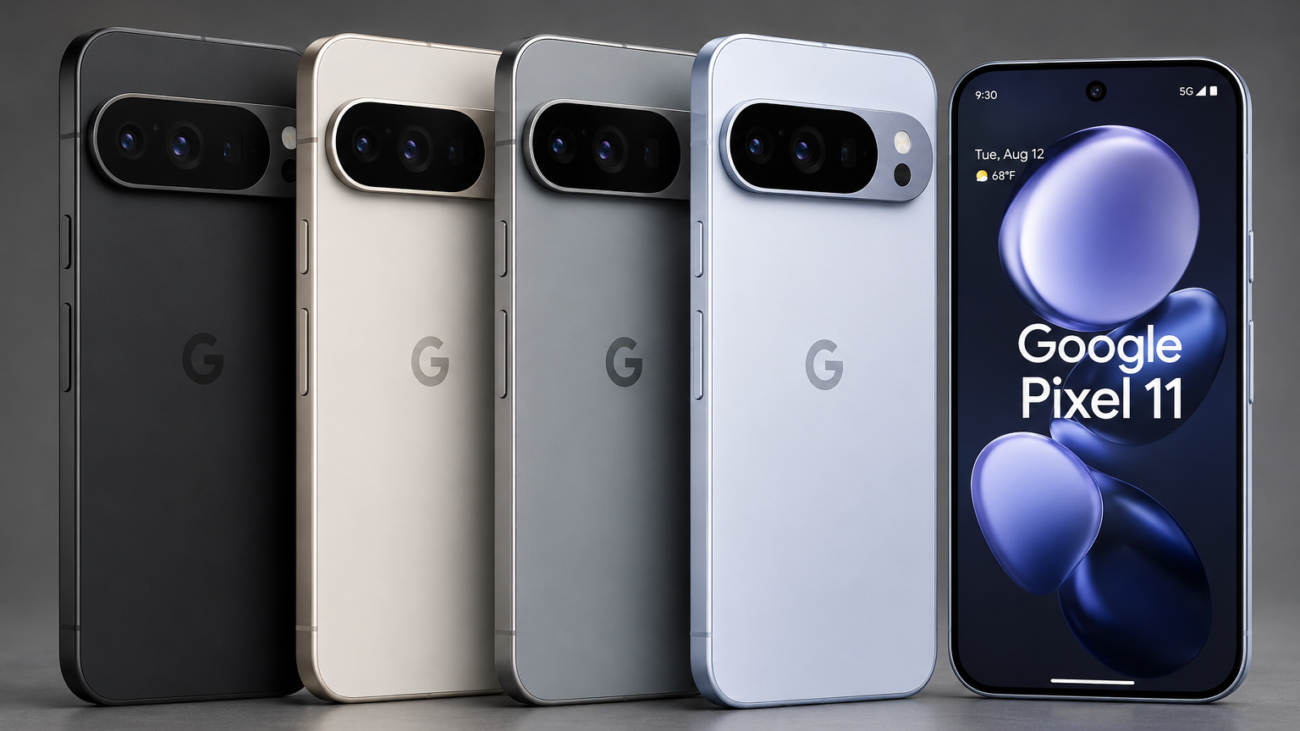
Google Pixel 11: Google Is Putting AI at the Centre of Your Phone

Google has revealed the new Pixel 11, and this year the most interesting part isn’t the camera, the screen or even the new processor.

It’s AI.

For years, buying a new smartphone was fairly predictable. You got a better camera, a faster processor, a brighter display and hopefully a battery that lasted a little longer.

The Pixel 11 feels different.

Google is trying to turn the smartphone from something that simply runs apps into something that actually understands what you’re trying to do.

And Gemini is at the centre of it.

Meet the Google Pixel 11

The new Pixel family includes the Pixel 11, Pixel 11 Pro, Pixel 11 Pro XL and Pixel 11 Pro Fold.

On paper, there are plenty of upgrades you’d expect from a new generation of Pixel phones. Better cameras, improved performance and Google’s latest Tensor G6 processor are all here.

But specs only tell part of the story.

Google has spent years developing Gemini, and we’re now starting to see why owning both the software and the hardware matters so much.

Google doesn’t just want you to open Gemini when you have a question.

It wants Gemini to become part of how you use your phone.

Your Phone Is Starting to Understand You

Think about how we use smartphones today.

You open Google Maps to find somewhere.

You open your calendar to check when you’re free.

You open your email to find a booking.

You open a browser to research something.

You open another app to message somebody.

Every task requires us to decide which app we need, find it and then do the work ourselves.

AI could completely change that.

Instead of jumping between five different apps, imagine simply telling your phone what you want to achieve.

You might say:

“Find the hotel confirmation in my email, tell me what time I need to leave tomorrow and show me the quickest route.”

Your phone already has access to many of the tools needed to answer that question.

What’s been missing is the intelligence capable of connecting everything together.

That’s where Gemini becomes interesting.

The Pixel Camera Is Becoming More About Software

Google has always taken a slightly different approach to smartphone cameras.

While other manufacturers competed over megapixels and increasingly large camera sensors, Google became known for computational photography.

In simple terms, the software processing the photo became almost as important as the camera taking it.

AI takes that idea much further.

The Pixel 11 generation brings upgraded camera technology alongside intelligent photography features that can help understand and process what you’re capturing.

And that raises an interesting question.

When we compare smartphone cameras in a few years, will we even care as much about the physical camera?

Or will we care more about what the AI behind it can do?

A great smartphone camera may eventually be defined by how well it understands the scene in front of it rather than simply how many megapixels it has.

Then There’s Google’s New Tensor G6

Hidden inside the Pixel 11 is perhaps one of its most important upgrades.

Google’s new Tensor G6 processor.

Processors aren’t particularly exciting to most people. Nobody sits in the pub discussing neural processing units.

But Tensor is important because Google isn’t designing these chips purely to make apps open slightly faster.

It’s designing them with AI in mind.

Some artificial intelligence tasks can now happen directly on the phone rather than sending everything to huge computers sitting inside a data centre.

That can mean faster responses and more useful features.

It can also potentially mean greater privacy because certain information can be processed locally.

Your phone is slowly becoming powerful enough to run forms of artificial intelligence that would once have required enormous computing resources.

That’s quite remarkable when you think about it.

We Could Be Moving Beyond Apps

Here’s where things get really interesting.

For nearly two decades, apps have defined smartphones.

Need a taxi? Open an app.

Want food? Open an app.

Need directions? Open an app.

Want to book a hotel? Open another app.

AI agents could eventually change this behaviour.

Instead of choosing which application to use, you simply tell your phone what you want.

Imagine saying:

“Find me a highly rated Italian restaurant near my hotel tomorrow night, make sure it has vegetarian options and find me a table for two at around 7pm.”

Today you’d probably use Google, Maps, restaurant websites and perhaps a booking platform to complete that task.

In the future, your AI assistant could potentially handle much of that work for you.

That’s a much bigger change than adding another chatbot to your phone.

Google Has a Huge Advantage

There’s another reason the Pixel 11 is worth watching.

Google owns an extraordinary amount of the technology needed to build this future.

It has Android.

It has Google Search.

It has Maps.

It has Gmail.

It has YouTube.

It has Google Cloud.

It has Gemini.

And now it has increasingly powerful AI focused Tensor processors inside its own phones.

When all of those pieces begin working together, the possibilities become much bigger.

Google isn’t simply trying to build a better smartphone.

It’s trying to build an intelligent ecosystem around you.

Apple and Samsung Won’t Be Watching Quietly

Of course, Google isn’t alone.

Apple, Samsung and practically every major technology company are investing heavily in artificial intelligence.

That means the old smartphone battle could be about to change.

For years, people argued about who had the better camera, better display or better operating system.

The next argument might be much simpler.

Who has the best AI assistant?

And more importantly:

Which AI actually saves you time?

Nobody wants 200 AI features they’ll never use.

The companies that succeed will probably be the ones that make AI almost invisible.

You ask for something.

Your phone understands.

It gets it done.

That’s when AI becomes genuinely useful.

This Matters to Businesses Too

You might be wondering what any of this has to do with businesses in the UK.

Potentially quite a lot.

Think about how people currently discover companies.

Someone looking for a website developer might search Google for:

“web design company Manchester”

They’ll see search results, visit several websites, read reviews and eventually contact a few companies.

AI assistants could change that journey.

Instead, someone could ask:

“Find me three web development companies in Manchester that build bespoke websites, have good reviews and can integrate a CRM.”

The AI could potentially do much of the research for them.

That changes the challenge for businesses.

Your website won’t only need to convince people.

Increasingly, it may also need to give AI systems enough reliable information to understand who you are, what you do and why they should recommend you.

That’s going to make good websites, useful content, strong branding and clear information even more important.

So, Is the Pixel 11 Actually a Big Deal?

Maybe not because of the phone itself.

Next year there will be another Pixel.

There will be another iPhone.

There will be another Galaxy.

The bigger story is what’s happening underneath all of them.

We’re watching smartphones slowly transform from devices that wait for instructions into devices that can understand context.

Right now, AI still feels like something you deliberately use.

You open ChatGPT.

You open Gemini.

You type a question.

You wait for an answer.

That won’t necessarily be how AI works forever.

Eventually, artificial intelligence may simply become part of the technology around us.

Your phone will understand it.

Your car will understand it.

Your website will use it.

Your business software will use it.

And eventually we might stop talking about “AI features” altogether because they’ll simply be normal features.

That’s why the Google Pixel 11 is interesting.

It’s not just another new phone.

It’s another glimpse at what our phones are becoming.

And the future looks a lot less like opening apps and a lot more like simply asking for what you want.

Hivebyte Technology

We build websites, custom software and digital solutions for businesses that want to make better use of modern technology.

As AI continues to change how people search, work and interact with businesses online, we’ll be following the technology that actually matters and explaining what it means without the jargon.

Screenshot 2026-07-01 124250

Grow Your Chesterfield Business with Professional Website Design & Digital Marketing

Get a Free Website & Marketing Consultation

HOW CAN WE HELP YOUR CHESTERFIELD BUSINESS GROW?

Get in touch with us today to discover how our expert website design, SEO, Google Paid Advertising, social media marketing, CRM systems, eCommerce solutions, mobile app development, logo design, and branding & visual identity services can help your business generate more leads, increase sales, and stand out from the competition.

We work with businesses throughout Chesterfield and the surrounding areas, creating powerful digital solutions that deliver measurable results.

Did you know that thousands of businesses in Chesterfield struggle to appear on Google because their websites aren’t properly optimised? A professionally designed website combined with effective SEO can dramatically improve your online visibility, helping potential customers find your business before they find your competitors.

Whether you’re launching a new business, rebranding an existing company, or looking to generate more enquiries, having a modern website design, a memorable logo, and a consistent branding and visual identity creates trust and helps convert visitors into customers.

Your website should work as hard as you do. We design fast, mobile-friendly websites that integrate with powerful CRM systems, allowing you to manage enquiries, automate follow-ups, organise customer data, and streamline your sales process from one central platform.

Looking to sell products online? Our bespoke eCommerce solutions provide everything your business needs to sell online successfully. From secure payment gateways and inventory management to customer accounts and order tracking, we create online stores that are designed to maximise conversions and grow your revenue.

Having a great website is only the beginning. Our proven SEO strategies help improve your rankings in Google search results, while our expertly managed Google Paid Advertising (Google Ads) campaigns generate targeted traffic immediately, delivering qualified leads to your business from day one.

Social media has become one of the most effective ways to build trust and engage with customers. We create and manage professional social media marketing campaigns across platforms including Facebook, Instagram, LinkedIn and TikTok, helping your business increase brand awareness, grow your audience and generate new enquiries.

More customers are browsing and buying from their smartphones than ever before. Our bespoke mobile app development services help businesses improve customer engagement, simplify bookings, offer loyalty programmes and provide seamless user experiences across both iOS and Android devices.

Every successful business starts with a strong identity. Our creative team specialises in professional logo design, complete branding, and cohesive visual identity packages that ensure your business looks professional across your website, social media, printed materials, signage and digital advertising.

Unlike agencies that focus on just one area of digital marketing, we provide a complete solution under one roof. From stunning website design and technical SEO to Google Paid Advertising, social media management, CRM integration, eCommerce development, mobile app creation, logo design, and complete branding & visual identity, we help businesses build a powerful online presence that drives long-term growth.

If you’re looking to grow your business in Chesterfield, attract more customers, and increase your online sales, we’re here to help. We take the time to understand your business goals before creating a bespoke digital strategy tailored specifically to your needs.

Whether you’re a start-up, local business, established company or national brand, our experienced team will guide you every step of the way, delivering innovative digital solutions that produce real results.

Why Choose Us?

  • Professional Website Design
  • Search Engine Optimisation (SEO)
  • Google Paid Advertising (Google Ads)
  • Social Media Marketing & Management
  • CRM System Integration
  • Bespoke eCommerce Solutions
  • Mobile App Development
  • Professional Logo Design
  • Branding & Visual Identity
  • Ongoing Website Support & Digital Marketing
  • Transparent Pricing
  • No Long-Term Contracts
  • Results-Focused Strategies

Contact us today for a free consultation and discover how our complete digital marketing and web development services can help your Chesterfield business grow.