

Hivebyte Tech

UK Businesses Cannot Afford to Wait. Technology Is Moving Faster Than Most Companies Are Adapting

Technology is changing how businesses operate, compete and grow at extraordinary speed. We explore why UK businesses need to accelerate digital transformation, AI adoption, automation, cybersecurity and data strategy before the gap becomes harder to close.

Technology has always changed business. What feels different now is the speed.

For decades, businesses could often watch a new technology emerge, wait for larger organisations to experiment with it, and adopt it several years later. That approach carried risks, but it was often survivable.

In 2026, that window is getting much smaller.

Artificial intelligence, automation, cloud platforms, connected business systems, cybersecurity and data analytics are developing simultaneously. More importantly, these technologies are beginning to work together.

For UK businesses, the question is therefore no longer simply:

“Should we invest in technology?”

The more important question is:

“How quickly can we modernise without losing control of the business?”

That distinction matters.

The companies that succeed over the next few years may not necessarily be those spending the most on technology. They are more likely to be businesses that understand where technology creates genuine commercial advantage and can implement it faster than their competitors.

The Technology Gap Is Becoming a Business Gap

Consider two businesses competing in the same market.

The first still manages enquiries manually. Customer information sits across emails, spreadsheets and individual employees’ computers. Quotes are created manually. Follow-ups depend on somebody remembering to make a call. Reports take hours to prepare, and management decisions are often based on information that is already several weeks old.

The second business has connected its website, CRM, communications, sales pipeline, reporting and automation.

A new enquiry arrives.

It is automatically recorded. The correct person is notified. The prospect receives a response. Follow-up tasks are created. Management can see the opportunity in the pipeline, and performance data becomes available without somebody manually creating another spreadsheet.

These businesses may sell exactly the same product or service.

But operationally, they are no longer really competing on equal terms.

The second company can potentially respond faster, understand customers better, reduce administration and make decisions with more current information.

This is why digital transformation should not be viewed purely as an IT project.

It is increasingly a question of business competitiveness.

AI Is Accelerating the Difference

Artificial intelligence has made this more urgent.

The first wave of business AI adoption focused heavily on generating text, images and marketing content. Those applications attracted enormous attention, but they represent only one part of the opportunity.

The deeper transformation comes when AI starts becoming embedded within everyday business processes.

Imagine systems capable of helping businesses analyse thousands of customer interactions, identify sales opportunities, summarise complex documents, detect unusual activity, classify support requests, assist employees with internal knowledge and automate parts of repetitive workflows.

That changes the economics of certain types of work.

A process that previously required several hours of human administration may eventually require minutes of human supervision.

But there is an important point that sometimes gets lost in discussions about AI:

Buying access to an AI tool does not automatically make a business AI-ready.

If your customer records are inconsistent, your systems do not communicate, your processes are poorly defined and important information remains scattered across dozens of locations, AI has very little solid infrastructure to work with.

Before many businesses can properly exploit AI, they need to improve the foundations underneath it.

The Spreadsheet Problem

Spreadsheets remain extremely useful. The problem begins when they quietly become the infrastructure of an entire organisation.

One spreadsheet contains customers.

Another contains quotations.

Someone else maintains the sales pipeline.

Finance has another version of customer information.

Marketing has its own mailing list.

Then somebody creates a “master spreadsheet” to bring everything together.

Six months later there are four versions of the master spreadsheet.

This is not simply untidy administration.

It affects decision-making.

When information is fragmented, businesses struggle to answer surprisingly basic questions quickly:

Who are our most valuable customers?

Where are our leads coming from?

How many opportunities are currently open?

Which customers have not heard from us recently?

Which services generate the strongest margins?

Where are potential customers dropping out of the sales process?

Technology should make those answers easier to obtain.

Automation Will Change the Economics of Small Business

One particularly important development for the UK economy is that sophisticated technology is becoming accessible to much smaller organisations.

Historically, large companies had an enormous technological advantage.

They could afford custom software, dedicated IT departments, sophisticated CRM platforms, large-scale analytics and automation.

That gap is narrowing.

A smaller business can now use cloud infrastructure, automation, bespoke software and AI capabilities that would once have required substantial capital investment.

That creates an interesting shift.

Technology can allow a 20-person organisation to operate with some of the systems and capabilities previously associated with a company many times its size.

For SMEs, this could be transformational.

The objective should not simply be to replace employees with automation. A more productive strategy is to remove repetitive administrative work so that people can concentrate on areas where human judgement, relationships, creativity and expertise matter.

Customers Are Changing Faster Too

Technology adoption is not happening only inside businesses.

Customers are changing their expectations.

People increasingly expect fast responses, straightforward digital experiences, accurate information and consistent communication across different channels.

A company may believe that its customer service is good because it responds within two working days.

But if a competitor responds intelligently within ten minutes, the customer’s definition of “good service” may change.

This creates what we might call an expectation gap.

Technology raises expectations in one industry, and customers eventually carry those expectations into another.

Businesses are therefore not competing solely against companies in their own sector. They are indirectly competing against the best digital experiences their customers encounter everywhere else.

UK SMEs Have a Major Opportunity

The United Kingdom has a large and diverse SME economy.

That is a strength, but smaller businesses can sometimes postpone technology investment because immediate operational pressures always feel more urgent.

There is another customer to serve.

Another invoice to send.

Another employee to recruit.

Another deadline.

Technology projects are pushed into “next quarter”.

Then next quarter becomes next year.

The danger is that digital debt accumulates.

Outdated systems require workarounds. Workarounds create additional processes. Those processes become dependent on individual employees. Eventually changing the system becomes significantly more difficult because the business has built years of operations around it.

Modernisation becomes more expensive precisely because it was postponed.

Cybersecurity Must Grow With Digital Transformation

There is another side to increased digital adoption.

As businesses become more dependent on technology, their exposure to cyber risk also increases.

Customer information, financial records, email accounts, cloud services and internal systems are valuable assets.

Cybersecurity therefore cannot be something businesses consider after digital transformation.

It must be part of the transformation itself.

That means thinking seriously about access controls, backups, software updates, employee awareness, authentication, data protection and what happens if a critical system becomes unavailable.

For UK organisations, this also intersects with responsibilities around personal data and regulatory compliance.

Digital growth without appropriate security simply creates a larger digital attack surface.

The Real Competitive Advantage Will Be Integration

Over the next few years, businesses will probably accumulate even more technology.

CRM.

Accounting software.

AI assistants.

Marketing platforms.

Customer support systems.

Cloud storage.

Automation tools.

Analytics.

Cybersecurity products.

But owning twenty different systems is not necessarily digital transformation.

The real value emerges when technology forms a coherent operating environment.

Your website should communicate with your CRM.

Your CRM should support your sales process.

Your sales data should inform management reporting.

Your customer systems should support marketing and service.

Automation should move information between systems without unnecessary manual re-entry.

And AI should sit on top of reliable processes and useful data rather than becoming another disconnected tool.

Integration may become more valuable than simply adding more software.

Businesses Should Not Digitise Bad Processes

Speed is important, but blindly adopting technology is not the answer.

If a process is inefficient, automating it can simply produce inefficiency faster.

Businesses should first ask:

What are we actually trying to achieve?

Where are employees losing time?

Where are customers experiencing friction?

Where is information being entered more than once?

Which decisions are difficult because management lacks reliable data?

Which processes depend too heavily on one individual?

Only then should technology be selected.

The objective is not to become “more digital”.

The objective is to become a better business through technology.

The Next Three Years Could Matter More Than the Previous Ten

There is a tendency to imagine technological change as a gradual upward line.

The reality can be different.

Several technologies can mature at the same time and suddenly reinforce one another.

Cloud computing created infrastructure.

APIs made systems easier to connect.

Large datasets created valuable information.

Automation made workflows programmable.

AI is now beginning to make those systems increasingly intelligent.

That combination is powerful.

Businesses that build strong digital foundations now will be in a much better position to adopt whatever comes next.

Those that continue postponing modernisation may eventually discover that they are not one software upgrade behind their competitors.

They are an entire operating model behind.

UK Businesses Do Not Need to Chase Every Trend

There is no reason for every organisation to adopt every new technology.

In fact, doing so would probably waste money.

A construction company, solicitor, retailer, manufacturer and professional services firm will have very different requirements.

What every business should be doing, however, is actively evaluating where technology is changing its market.

Look at your organisation honestly.

Where are people performing work that software could handle?

Where is valuable information trapped?

Where are customers waiting unnecessarily?

Where are sales opportunities being lost?

Where does management lack visibility?

Where could AI genuinely improve productivity?

Those questions are much more valuable than asking which technology happens to be fashionable this month.

The Cost of Waiting Is Changing

For many years, delaying technology investment mainly meant accepting some inefficiency.

That calculation is changing.

When competitors can automate processes, analyse information faster, operate with lower overheads and deliver better digital customer experiences, waiting has a competitive cost.

The gap can compound.

Better systems create better data.

Better data enables better automation.

Better automation creates more capacity.

More capacity allows faster growth and further investment.

This is why catching up later may become considerably harder than businesses expect.

Final Thought: Start Before the Gap Becomes a Chasm

UK businesses do not need to transform overnight.

But they do need to start.

Modernise one critical process.

Connect disconnected systems.

Improve the CRM.

Automate repetitive administration.

Strengthen cybersecurity.

Organise business data.

Experiment carefully with AI.

Measure the result and then move to the next problem.

The businesses most prepared for the future will not necessarily be those predicting exactly what technology will look like in five years.

They will be the businesses building organisations capable of adapting quickly when that future arrives.

And increasingly, speed of adaptation may become one of the most important competitive advantages a UK business can have.
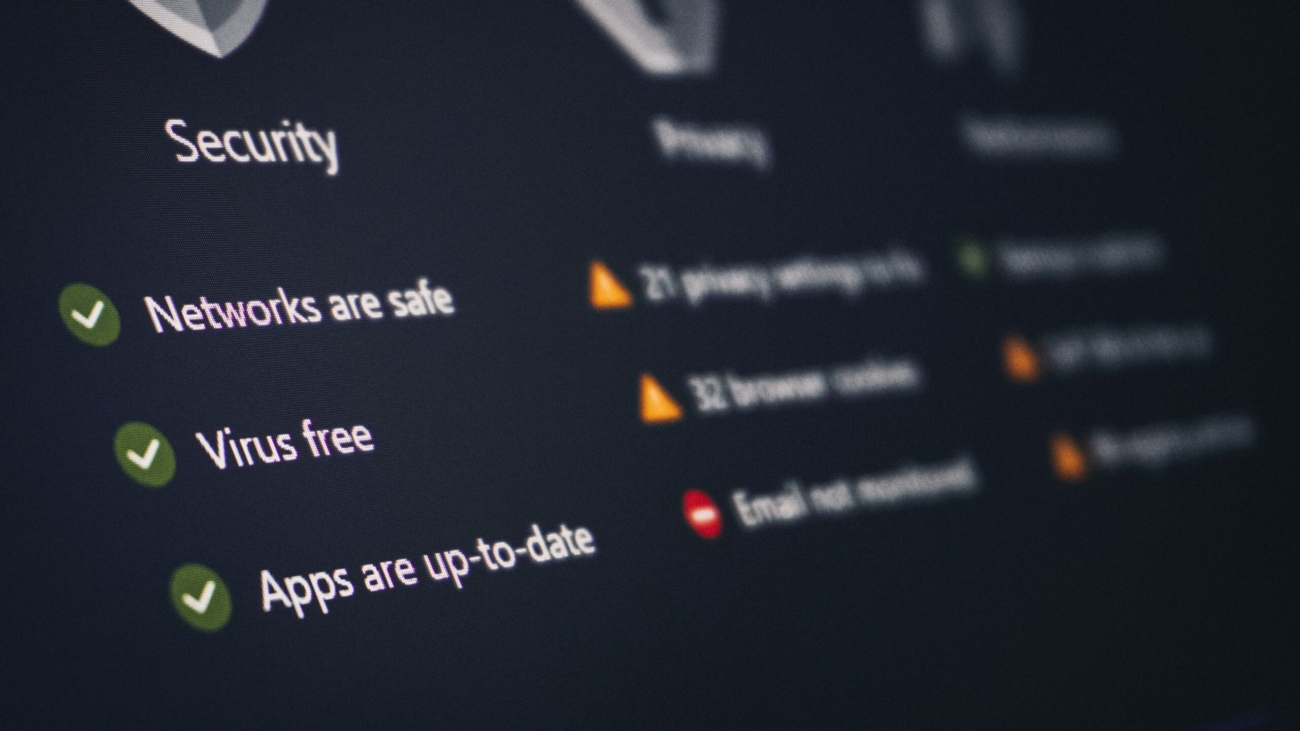

B Secuirty

Your Business Is Going Digital, Is Your Security Keeping Up?

Cybersecurity for Small Businesses: What You Need to Know in 2026

Technology Is Changing Small Businesses Faster Than Ever

For many small businesses, digital technology is no longer something that sits quietly in the background.

Your website takes enquiries.

Your CRM stores customer information.

Your team works through cloud platforms.

Payments happen online.

Emails contain commercially sensitive information.

And increasingly, artificial intelligence is being connected to everyday business processes.

UK government research published in 2026 found that 41% of businesses handling digitised data were using AI-based technologies, although the level of integration varied considerably depending on business size and digital maturity.

That creates enormous opportunities.

But it also creates a simple question:

As your business becomes more digital, is your security keeping up?

Cybersecurity Isn’t Just for Large Companies

There’s a common misconception that cybercriminals are only interested in large corporations.

Small businesses can also be attractive targets because they may have websites, customer information, email accounts and payment systems without the security resources available to a large enterprise.

And the threat is evolving.

On 27 August 2026, more than 100 major technology and financial organisations called for increased action against AI-driven cyber threats, warning that advancing AI capabilities could make cyberattacks substantially more pervasive.

For a small business, cybersecurity therefore shouldn’t begin after something has gone wrong.

It should be part of how your technology is built and managed.

1. Your Website Needs More Than a Good Design

A professional website needs to look good.

But what happens behind it is equally important.

Software updates, plugins, administrator accounts, hosting, backups and forms can all affect the security of a website.

An outdated website can create unnecessary vulnerabilities.

That’s why businesses should treat their website as an active technology platform rather than something that gets built once and forgotten.

Regular maintenance matters.

2. Passwords Are Still a Weak Point

Businesses can spend thousands on technology while leaving accounts protected by weak or reused passwords.

That’s a problem.

Important systems should use strong, unique passwords and multi-factor authentication wherever it is available.

Access also needs to be reviewed when employees or contractors leave the business.

Someone who no longer works with your organisation shouldn’t retain access to your website, CRM, email or other systems simply because nobody remembered to remove their account.

3. Backups Need to Actually Work

“We have backups.”

That’s reassuring — until you need one.

A good backup strategy isn’t simply about having a backup somewhere.

Businesses should understand:

What is being backed up?

How frequently is it backed up?

Where is that backup stored?

How quickly could the business recover from it?

Your website and other important systems may contain years of work.

Recovery planning deserves the same attention as prevention.

4. Your CRM Contains Valuable Information

A CRM can become one of the most important systems inside a growing business.

Customer details, enquiries, project history, notes and communications may all live there.

That means access should be controlled carefully.

Not every employee necessarily needs access to everything.

A properly designed CRM should give people the access they need to perform their role without unnecessarily exposing information across the organisation.

5. AI Introduces New Questions

AI is becoming increasingly useful for businesses.

Manchester’s technology sector is already moving from experimentation towards practical AI adoption in everyday operations, products and services.

But businesses shouldn’t connect AI to sensitive information without thinking about what data is being used, where it is going and who can access the resulting systems.

The goal shouldn’t be:

“Put AI everywhere.”

It should be:

“Where can AI create genuine value safely?”

That’s a much better technology strategy.

6. Your Staff Are Part of Your Security

Technology alone can’t solve every security problem.

Employees need to recognise suspicious emails, unusual login requests, unexpected attachments and attempts to obtain sensitive information.

As AI improves, convincing fraudulent messages can become easier to create at scale.

Cybersecurity therefore becomes partly a people problem.

A technically secure system can still be compromised if someone is persuaded to hand over access.

7. Small Businesses Need Connected Technology — Not More Technology

This is where many businesses go wrong.

They keep adding software.

One platform for customers.

Another for sales.

Another for projects.

Another for invoices.

Another for support.

Another for marketing.

Eventually the business has more technology but hasn’t necessarily become more efficient.

The better approach is to think about the entire digital journey:

Website → Enquiry → CRM → Customer → Project → Support → Reporting

When those systems are designed to work together, businesses can reduce repetitive administration while maintaining better control over their information.

Manchester Businesses Are Entering a Major Digital Growth Period

This is particularly relevant here in Greater Manchester.

Manchester Digital’s 2026 research says the region’s technology businesses are increasingly focused on practical AI adoption, productivity and sustainable growth.

Greater Manchester’s AI sector alone was valued at $4.7 billion in June 2026, with approximately 13,500 AI professionals based across the city region.

The opportunity for local businesses is significant.

But successful digital transformation isn’t about adopting every new piece of technology.

It’s about building the right technology properly.

Build for Growth. Build for Security.

A modern business website should be more than attractive.

A CRM should be more than a database.

Automation should do more than save a few clicks.

And AI should solve genuine business problems rather than being introduced simply because it’s fashionable.

At Hivebyte Technology Ltd, we believe technology should make businesses easier to run, easier to grow and easier for customers to interact with.

From modern websites and e-commerce platforms to CRM systems and ongoing digital support, the goal is the same:

Build technology that works for the business today — and is ready for where the business is going next.

Ready to improve your business technology?

Talk to Hivebyte Technology Ltd about your next website, CRM or digital project.

Cyber Security 2026

UK Cyber Security in 2026: Is Your Business Really Prepared?

Cyber security is once again a major talking point across the UK. High-profile cyber incidents regularly remind businesses how dependent they have become on websites, email, cloud platforms, customer databases and other digital systems.

For small and medium-sized businesses, it can be tempting to think cyber attacks are primarily a problem for large corporations and government organisations.

They aren’t.

A business website, WordPress installation, e-commerce store or CRM can contain valuable information and provide an important route into a company’s wider digital operations. Protecting these systems should therefore be treated as an everyday business responsibility rather than something considered only after an incident.

Your Website Is Part of Your Business Infrastructure

A modern website does much more than display information.

It may collect customer enquiries, process orders, connect to payment providers, integrate with a CRM, manage bookings or hold customer accounts.

If that website becomes unavailable or compromised, the impact can quickly extend beyond the website itself.

Customers may be unable to contact you, orders could be interrupted, confidential information could be exposed and the reputation you’ve spent years building could be damaged.

That’s why website security needs to be considered alongside design, speed and search visibility.

Outdated Websites Can Create Unnecessary Risk

One of the simplest ways businesses can reduce their exposure is by keeping their websites properly maintained.

For a WordPress website, this includes regularly reviewing and updating:

  • WordPress itself
  • Themes
  • Plugins
  • PHP and hosting environments
  • User accounts and permissions
  • Security configurations
  • Backups

Updates aren’t simply about getting new features. They can also contain important security fixes.

A website that hasn’t been maintained for months or years can therefore become an unnecessary weak point in a company’s digital infrastructure.

Password Security Still Matters

Despite increasingly sophisticated technology, basic account security remains extremely important.

Businesses should avoid sharing passwords between employees, using the same password across multiple services or leaving accounts active when somebody no longer requires access.

Strong, unique passwords and multi-factor authentication should be used wherever appropriate.

Businesses should also regularly review who has administrator access to websites, hosting accounts, email systems and other important platforms.

Not everybody needs administrator privileges.

Giving people only the access they actually require can reduce risk if an individual account is ever compromised.

Backups Are Essential

Imagine arriving at work tomorrow and discovering your entire website has disappeared.

Could you restore it?

More importantly, when was your last usable backup?

A reliable backup strategy is one of the most important protections a business can have.

Backups should be created regularly and stored appropriately. Businesses should also understand how those backups would actually be restored.

Having a backup is useful.

Knowing that the backup works is considerably better.

Be Careful With Emails and Unexpected Requests

Technology isn’t always the easiest route into a business.

Sometimes people are.

Phishing attempts can be designed to look like legitimate messages from suppliers, colleagues, banks, hosting companies and familiar online services.

A message might ask somebody to reset a password, open an attachment, approve a payment or sign into an account.

Employees should be encouraged to stop and verify unusual requests rather than acting immediately.

A few seconds spent checking an unexpected email could prevent a much larger problem.

E-Commerce Businesses Have Even More to Consider

Security is particularly important for businesses operating online stores.

Customers are trusting the business every time they create an account, submit their details or make a purchase.

E-commerce businesses should therefore pay particular attention to software maintenance, payment integrations, administrator access, backups and monitoring.

Security can also affect customer confidence.

A professional-looking website means little if customers don’t feel comfortable using it.

Your CRM Needs Protecting Too

Websites aren’t the only systems businesses need to think about.

A CRM can contain customer names, contact information, conversations, sales opportunities, internal notes and other valuable business information.

Access should be properly controlled.

Former employees should not retain access, unnecessary administrator accounts should be removed, and businesses should periodically review which users can see or change sensitive information.

As more business operations become digital, protecting the systems behind the website becomes just as important as protecting the website itself.

What Should UK Businesses Do Now?

Cyber security doesn’t always require a dramatic technology overhaul.

Start with the fundamentals.

Review your website and software updates. Check your backups. Review administrator accounts. Strengthen passwords. Enable multi-factor authentication where appropriate. Remove access that is no longer required. Make sure employees understand the risks of suspicious emails and unexpected login requests.

Most importantly, don’t wait until something goes wrong before discovering how your digital systems are managed.

Security Is an Ongoing Process

There is no single button that makes a business permanently secure.

Technology changes.

Websites change.

New vulnerabilities are discovered.

Employees join and leave.

New software gets installed.

That means security and maintenance need to be ongoing processes.

A website that was properly secured when it launched several years ago shouldn’t automatically be assumed to be adequately protected today.

Regular maintenance gives businesses an opportunity to identify problems earlier, keep software current and ensure important systems continue operating as expected.

Is Your Business Website Being Properly Maintained?

At Hivebyte Technology Ltd, we build and support websites, e-commerce platforms and CRM solutions for businesses.

We believe a business website shouldn’t simply look professional. The technology behind it should also be properly maintained, monitored and supported.

If you’re unsure when your website was last updated, whether your backups are working or who currently has administrator access, now is a good time to review it.

Protect the technology your business depends on.

Hivebyte Technology Ltd
Websites • E-Commerce • CRM • Maintenance & Support