
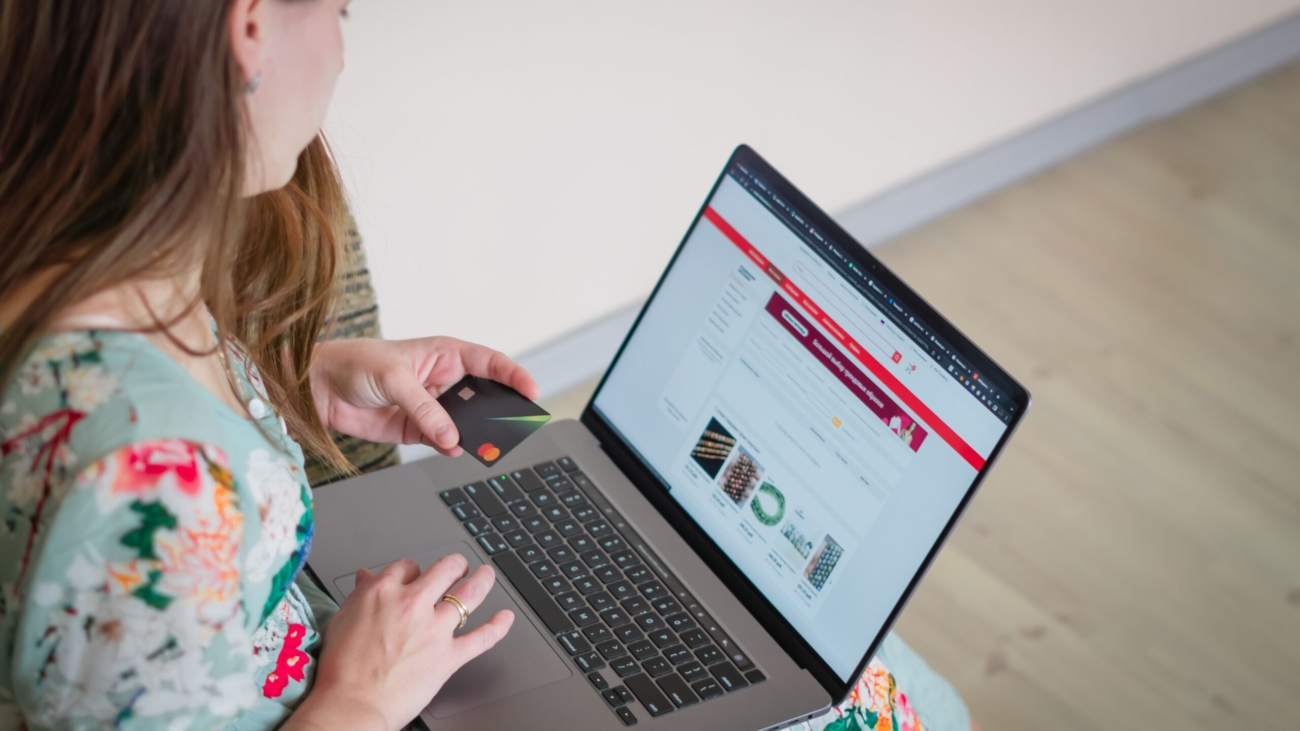
A business website is no longer just an online brochure. Discover why UK businesses need fast, professional, secure and effective websites that build trust, generate enquiries and support long-term growth.
There was a time when simply having a website was enough.
A business could create a few pages, add its telephone number, list its services and leave the website largely untouched for years.
That world has changed.
Today, a website is often one of the first serious interactions a potential customer has with a business. Before making a telephone call, sending an enquiry or visiting an office, people are likely to search online, compare several companies and form an opinion remarkably quickly.
For UK businesses, this means the question is no longer:
“Do we have a website?”
The better question is:
“Does our website actually help our business compete?”
There is a significant difference between the two.
At Hivebyte Technology Ltd, we believe a modern website should do much more than look attractive. It should communicate credibility, perform properly across devices, support search visibility, generate opportunities and connect with the wider technology behind the business.
Your Website Is Often Your First Meeting With a Customer
Imagine a potential customer has been recommended two businesses.
They search for both companies online.
The first website loads quickly. It looks professional on a mobile phone. The services are immediately clear. The company looks established. Contact information is easy to find, and there is a straightforward way to make an enquiry.
The second website takes several seconds to load. Parts of it do not display correctly on mobile. The design looks dated, the text is difficult to navigate and the visitor cannot immediately understand what the company actually does.
Which business feels more trustworthy?
The customer has not spoken to either company.
They have not visited their offices.
They may know very little about either organisation.
Yet they have already started forming a commercial judgement.
That is the power of a website.
Your digital presence can influence trust before your sales team ever gets the opportunity to speak.
In the UK Market, Credibility Matters
UK customers have enormous choice.
Whether somebody is looking for an accountant in Manchester, an engineering company in Birmingham, a technology provider in London or a professional service anywhere else in the country, search engines can present dozens of alternatives within seconds.
This makes credibility extremely important.
A strong website can communicate several things almost immediately:
- who you are and what your business does;
- which customers or industries you serve;
- why somebody should choose you;
- evidence of your experience and previous work;
- how customers can contact you;
- where your business operates;
- and whether your organisation appears professional and trustworthy.
A poorly designed website can communicate something too — just not necessarily the message the business intended.
If a company claims to be modern, professional and customer-focused but its website feels neglected, there is a disconnect between the promise and the experience.
Looking Good Is Not Enough
One of the biggest mistakes in website development is focusing entirely on appearance.
Design matters enormously, but a beautiful website that does not perform is still a poor business website.
A successful website needs several elements working together.
It should load quickly.
Navigation should make sense.
Pages should work correctly on mobile, tablet and desktop.
Calls to action should be clear.
Forms need to function reliably.
Content should answer the questions customers are actually asking.
Search engines need to be able to understand the site.
Security and maintenance need consideration.
And most importantly, the website needs to support a commercial objective.
That objective might be generating enquiries, selling products, booking appointments, building authority, recruiting employees or helping existing customers.
The technology should serve the business — not the other way around.
Mobile Is No Longer Secondary
Think about how often you personally search for a company from your phone.
Customers do the same.
A potential client might discover your company while travelling to work, sitting in a coffee shop, attending an event or browsing at home.
If your website technically “works” on mobile but requires constant zooming, has tiny text, oversized images or buttons that are difficult to press, the experience is still poor.
Responsive design should therefore not mean simply shrinking a desktop website.
A good mobile experience needs to be considered intentionally.
The information customers need most should be easy to reach. Telephone numbers should be usable. Forms should be manageable. Menus should be clear. Pages should remain fast.
Your mobile website is not a smaller version of your business.
For many visitors, it is your business website.
A Website Should Generate Business, Not Just Traffic
Businesses sometimes become overly focused on website visitor numbers.
Traffic is useful, but traffic alone does not pay invoices.
Suppose 5,000 people visit a website and almost nobody makes contact.
Now imagine another website receives 1,500 visitors but consistently produces relevant enquiries from potential customers.
Which website is performing better commercially?
The second one may be far more valuable.
This is where conversion-focused web design becomes important.
A visitor should not have to work out what to do next.
If you want them to request a quotation, make that obvious.
If you want them to telephone, make the number easy to find.
If you want them to book a consultation, create a simple route to booking.
Every important page should have a purpose.
A good website gently moves a visitor from:
Interest → Understanding → Trust → Action.
Search Visibility Starts With a Strong Website
A website is also the foundation of a company’s organic search presence.
Search engine optimisation is not simply about inserting keywords into paragraphs.
Technical performance, page structure, useful content, mobile usability, internal linking, website authority and many other factors contribute to how effectively a website can compete in search.
For UK businesses, local and regional searches can be particularly valuable.
Someone searching for a service in Manchester is demonstrating very different intent from somebody casually reading about that service.
A properly structured website gives a business the opportunity to build dedicated service pages, publish useful articles, answer customer questions and develop authority around the subjects that matter to its market.
This is one reason a website should be viewed as a long-term business asset rather than a one-off design project.
As the business grows, the website should grow with it.
Your Website Should Connect With the Rest of Your Business
This is where modern web development becomes particularly interesting.
A website does not need to operate in isolation.
It can become the front door to a much wider digital business system.
A customer completes an enquiry form.
Instead of that enquiry simply disappearing into an email inbox, the information could enter a CRM system.
The sales team can be notified.
A follow-up task can be created.
The source of the enquiry can be recorded.
The customer can receive confirmation.
Management can eventually see how many website enquiries became genuine opportunities and how many turned into customers.
Now the website is no longer simply marketing.
It has become part of the company’s operational infrastructure.
For growing UK businesses, connecting websites with CRM systems, automation, analytics and other business technology can create significant efficiencies.
Trust Is Built Through Details
Visitors may not consciously analyse every technical aspect of a website, but they notice when something feels wrong.
A broken link.
An outdated copyright date.
A contact form that fails.
A page that takes too long to appear.
Poor-quality images.
Spelling mistakes.
Old company information.
A warning from the browser about security.
Individually, these things may appear minor.
Together, they affect trust.
The opposite is also true.
A fast, clear and professionally maintained website sends a subtle message:
this business pays attention to its operation.
That can be particularly important when customers are considering higher-value services where credibility is a major part of the purchasing decision.
Your Website Works When Your Office Is Closed
There is another reason businesses sometimes underestimate the value of their website.
It works when nobody else is working.
At 11:30 at night, a potential customer can discover your company.
They can understand your services.
They can examine your previous work.
They can read about your expertise.
They can submit an enquiry.
Your physical office may be closed, but your digital business remains accessible.
A strong website therefore functions partly as a 24-hour sales and information resource.
It cannot replace human relationships, but it can make those relationships much easier to begin.
Cheap Websites Can Become Expensive
Price naturally matters to businesses, particularly SMEs.
But selecting a website purely on the lowest initial cost can create problems later.
A poorly constructed website may eventually require repeated fixes, perform badly in search, become difficult to update or need to be completely rebuilt when the business grows.
The better question is not simply:
“How much does the website cost?”
It is:
“What value should this website create for the business over the next several years?”
If a website generates qualified enquiries, strengthens credibility and supports sales, its commercial value can be significantly greater than its initial development cost.
A Website Must Evolve With the Business
Launching a website should not be the end of the project.
Businesses change.
Services change.
Customers change.
Search behaviour changes.
Technology changes.
Security requirements change.
A website that represented a company perfectly three years ago may no longer represent the organisation it has become.
Businesses should periodically ask:
Does our website still accurately represent us?
Are our most important services easy to find?
Does it perform properly on modern devices?
Are we receiving the enquiries we want?
Are there pages customers repeatedly struggle with?
Does the website connect properly with our other systems?
Are we publishing enough useful content?
What could we automate?
Those questions turn website management from an occasional design exercise into part of business strategy.
The UK Businesses That Stand Still Will Become Easier to Spot
As more UK companies improve their digital presence, outdated websites become increasingly noticeable.
That creates a widening gap.
One company may have a fast website, strong search presence, integrated CRM, automated enquiries, useful content and clear analytics.
Its competitor may still have a five-year-old website sending every enquiry into a generic mailbox.
Both companies may provide an excellent underlying service.
But one has built a significantly stronger digital route between the market and the business.
Over time, that difference matters.
A Good Website Is Not Really About the Website
This is perhaps the most important point.
A successful business website is ultimately not about animations, colours, layouts or even technology.
It is about people.
Can somebody find you?
Can they understand you?
Can they trust you?
Can they find what they need?
Can they contact you without frustration?
And once they make contact, can your technology help your team turn that opportunity into a customer?
That is what separates a website that simply exists from one that actually works for the business.
Final Thoughts
For UK businesses, having a website is no longer enough.
The website needs to perform.
It needs to represent the quality of the company behind it, provide an excellent experience across devices, communicate clearly, support search visibility and give potential customers an obvious route to take the next step.
And increasingly, it should connect with the wider technology that helps the business operate.
At Hivebyte Technology Ltd, we see websites as part of a much bigger picture — bringing together web development, business technology, CRM systems, automation and digital strategy to help organisations build stronger digital foundations.
Because your website should not simply tell people that your business exists.
It should help your business grow.