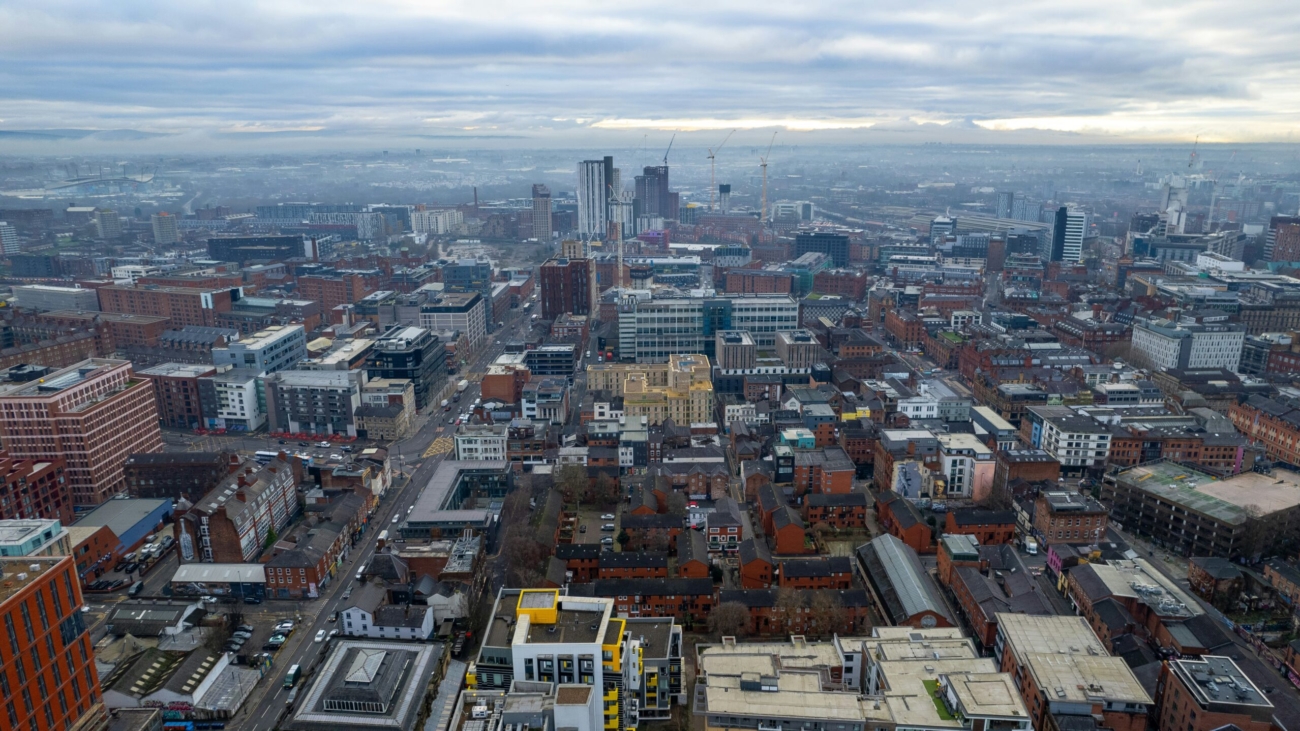
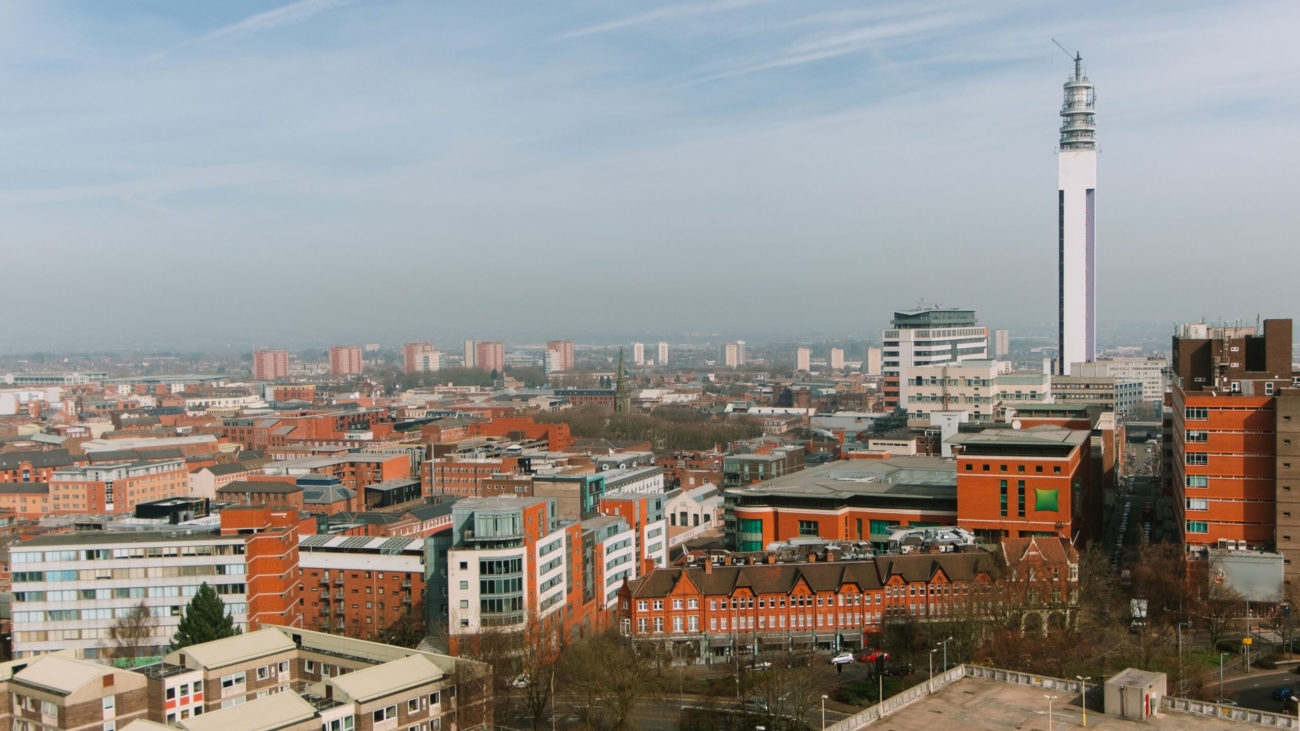
Manchester and the North West are developing rapidly as technology and digital business grow, but many businesses across Rochdale, Oldham, Stockport, Sale, Bury and Bolton are still being held back by outdated websites and weak digital marketing. Discover why now is the time to modernise.
Manchester and the wider North West are changing.
Technology businesses are growing. New developments are appearing across the region. Artificial intelligence is becoming part of everyday business. Customers are increasingly searching online before deciding who to contact, and companies are using automation, CRM systems, digital marketing and better websites to compete more effectively.
But this transformation is not happening at the same speed everywhere.
Across Manchester, Rochdale, Oldham, Stockport, Sale, Bury, Bolton and the surrounding areas, there are thousands of established businesses providing excellent products and services.
Many have strong reputations built over decades.
Yet some are still operating digitally as though the way customers find businesses has not changed.
Their website may be several years old.
Their Google presence may be weak.
There may be no clear marketing strategy.
Enquiries arrive through different channels without proper tracking.
Social media is updated occasionally rather than strategically.
Customer information remains scattered across emails and spreadsheets.
And sometimes there is still a belief that:
“Our business has always grown through recommendations. We don’t really need digital marketing.”
That approach may have worked extremely well in the past.
But the market around these businesses is changing.
At Hivebyte Technology Ltd, we believe this creates one of the biggest opportunities for businesses across Greater Manchester.
The objective is not to replace what already works.
It is to combine traditional business experience with modern technology and marketing.
Manchester Is Becoming Increasingly Digital
Manchester has developed into one of the UK’s major regional centres for digital and technology businesses.
But the impact of technology goes much further than companies that actually sell software.
Technology is changing construction.
Manufacturing.
Professional services.
Property.
Recruitment.
Retail.
Hospitality.
Healthcare.
Transport.
Trades.
Finance.
And almost every other sector operating across the region.
A business does not need to become a technology company to benefit from technology.
A builder can have a better enquiry and quotation system.
An accountant can automate appointment processes.
A manufacturer can improve customer and operational data.
A solicitor can make it easier for potential clients to find and understand services.
A retailer can improve its online presence.
A professional services company can use a CRM to prevent opportunities from being forgotten.
The question is not:
“Are we a technology business?”
It is:
“Could technology make our business better?”
For most organisations, the answer deserves serious consideration.
The Digital Gap Between Local Businesses Is Becoming Obvious
Take two businesses offering similar services in Greater Manchester.
The first has operated successfully for 25 years.
Its website was built six years ago.
It looks dated on a mobile phone. The services are difficult to understand. There are few recent updates and no clear reason why a potential customer should choose the company.
The second business may be considerably younger.
But its website is fast, modern and professional.
It appears prominently when customers search.
It publishes useful content.
Its Google presence is maintained.
Reviews reinforce trust.
Visitors immediately understand the services.
Enquiries are connected to a CRM.
Potential customers receive quick responses and structured follow-up.
Which company is better?
We cannot know from its website alone.
But that isn’t necessarily what the potential customer sees.
The customer sees the company that has made itself easier to discover, understand and trust.
That difference can influence who receives the enquiry.
Rochdale Businesses Have an Opportunity to Modernise
Rochdale has a long history of entrepreneurship, manufacturing and independent business.
Many established companies have grown through relationships, repeat customers and recommendations.
Those strengths should not disappear.
But digital technology can amplify them.
Imagine a business with an excellent reputation that has spent 20 years building customer trust.
A strong website can take that reputation and present it to thousands of people who have never previously heard of the company.
Good search visibility can introduce the business to customers actively looking for its services.
Digital marketing can keep the company visible.
CRM technology can help manage the opportunities that follow.
The objective is not to abandon traditional business.
It is to make traditional business stronger digitally.
Oldham Businesses Cannot Depend Entirely on Reputation
The same applies across Oldham.
Reputation is enormously valuable.
But there is a difference between having a good reputation and making that reputation visible.
A potential customer who has never dealt with your business does not automatically know that you have served the area for 30 years.
Your website needs to tell them.
Your content needs to demonstrate your knowledge.
Your reviews can provide evidence.
Your case studies can show your experience.
Your digital presence should communicate the quality that existing customers already understand.
Otherwise, decades of expertise can be almost invisible to somebody discovering the business for the first time.
Stockport Is Moving Quickly
Stockport is experiencing significant development and business activity.
For businesses operating there, this creates opportunity — but also competition.
As areas develop, new businesses enter the market.
Newer companies often begin with digital technology already built into their operations.
They do not need to replace an old website because they never had one.
They may start with a modern CRM.
They may use cloud technology immediately.
They may build marketing around search, social media and digital content from day one.
An established Stockport company therefore has an interesting advantage and disadvantage.
It has experience, customers, knowledge and reputation.
But a newer competitor may have better digital infrastructure.
The strongest position is to have both:
experience + modern technology.
Sale Businesses Are Competing for Digitally Aware Customers
Sale and the wider Trafford area contain a mixture of established businesses, professional services, independent companies and growing organisations.
Customers in these markets frequently research before contacting a business.
They compare.
They read.
They search.
They look at websites.
They examine reviews.
They check social media.
And increasingly, they expect the digital experience to reflect the quality of the company.
If your website says your company provides a premium service but the website itself feels neglected, customers notice the contradiction.
Your digital presence should reinforce your business positioning, not undermine it.
Bury Businesses Should Think Beyond Social Media
One mistake we see in digital marketing is treating social media as the entire strategy.
A Bury business might post regularly on Facebook, Instagram or LinkedIn and understandably believe it is actively marketing online.
But social media is only one part of the picture.
What happens after someone sees the post?
Where do they go?
Does the website build confidence?
Can they find the service they need?
Is there a strong call to action?
Can the business capture the enquiry?
Does anyone know which marketing produced that customer?
Is the lead followed up?
A strong digital strategy connects the pieces.
Marketing → Website → Enquiry → CRM → Follow-up → Customer.
That is considerably more powerful than simply generating likes.
Bolton Businesses Should Not Underestimate Search
Bolton has a substantial and diverse business community.
For many local companies, Google and other search experiences can represent an important route to customers.
Someone searches for a service.
Several businesses appear.
The customer starts comparing them.
At this point, your website becomes part of your sales process whether you planned for it or not.
If the website loads slowly, looks outdated or provides very little useful information, the visitor can leave within seconds.
There is no salesperson available to explain:
“Actually, we’re much better than our website makes us look.”
The opportunity may already be gone.
Your Website Is Your Digital Premises
Businesses spend significant amounts making their physical premises presentable.
Signs are maintained.
Reception areas are cleaned.
Vehicles are branded.
Employees wear appropriate clothing.
Offices are designed to create the right impression.
But sometimes the website — which potentially receives far more first-time visitors than the physical reception — receives very little attention.
Think about your website as your digital premises.
Would you invite an important potential customer into an office that had not been maintained for seven years?
Probably not.
Yet that is effectively what happens when customers arrive at an outdated website.
The North West Technology Economy Creates a Bigger Opportunity
The growth of technology across Manchester and the wider North West should not benefit only software companies.
It creates an ecosystem from which ordinary businesses can benefit.
Better connectivity.
Digital skills.
Technology providers.
Cloud platforms.
AI.
Automation.
Data analytics.
Modern marketing technology.
Sophisticated websites.
CRM systems.
Many technologies that were once practical mainly for larger corporations are now accessible to SMEs.
That changes the competitive landscape.
A relatively small company can build an impressive digital operation without employing a huge IT department.
AI Will Make the Difference Even Greater
Artificial intelligence is accelerating this transformation.
But local businesses should not feel pressured to use AI simply because it is fashionable.
The correct question is:
Where could AI genuinely improve this business?
Perhaps it helps employees find information.
Perhaps it assists with routine communications.
Perhaps it helps analyse customer data.
Perhaps it reduces administrative work.
Perhaps it supports marketing or customer service.
But businesses need the foundations first.
A good website.
Organised customer data.
Clear processes.
Appropriate systems.
Cybersecurity.
A sensible digital strategy.
AI becomes far more useful when it sits on top of a business that is already digitally organised.
Businesses That Wait Could Find Catching Up More Expensive
This is where the issue becomes urgent.
A business does not stand still simply because it chooses not to invest in technology.
Its competitors continue moving.
Imagine Company A improves its website this year.
It begins producing useful content.
That content gradually builds visibility.
More enquiries enter its CRM.
The business collects better customer data.
It introduces automation.
Employees save time.
Management gets better reporting.
It then starts introducing AI into selected processes.
Company B does nothing for three years.
When Company B finally decides to modernise, it is not simply one website behind.
It may be several years of digital development behind.
That is why delaying digital transformation can create what we might call digital debt.
The longer the business waits, the more there may eventually be to fix.
Good Marketing Is Not About Shouting Louder
Marketing sometimes has a bad reputation among traditional businesses.
That is understandable.
Poor marketing can feel intrusive, expensive and difficult to measure.
Good marketing is different.
It starts by understanding customers.
What are they looking for?
What problems do they have?
Why should they trust your business?
Where do they look for information?
What questions do they ask before buying?
Then you create a digital presence that answers those questions.
Marketing should not simply tell everyone:
“BUY FROM US.”
It should give the right people a reason to discover, understand and trust the business.
Local Knowledge Still Matters
Technology does not remove the importance of being local.
In many industries, it makes local relevance more valuable.
A customer searching for a company in Rochdale may prefer somebody who understands Rochdale.
A Stockport business may want a technology partner that understands the Greater Manchester market.
A Bolton SME may value being able to speak to real people rather than navigating a huge national organisation.
Digital technology can help local businesses communicate that advantage.
You can be modern without losing your local identity.
Do Not Replace What Works — Strengthen It
This is important for established businesses across Greater Manchester.
If referrals work, keep them.
If networking works, keep doing it.
If customers telephone, answer the phone.
If relationships drive your business, protect those relationships.
Digital transformation should add to those strengths.
A recommendation followed by an excellent website is stronger than a recommendation followed by a poor one.
Networking supported by LinkedIn can extend the relationship.
A telephone enquiry captured properly in a CRM can improve follow-up.
Traditional and digital business do not have to compete.
The strongest organisations combine them.
The Businesses That Adapt Will Be Better Positioned
Manchester, Rochdale, Oldham, Stockport, Sale, Bury and Bolton all have different economies, histories and business communities.
But they share one challenge.
The customer is becoming more digital.
Competition is becoming more digital.
Business operations are becoming more digital.
Technology is not waiting for every company to feel comfortable.
That does not mean businesses should panic or buy every new system.
It means they need a plan.
Look honestly at your website.
Look at your Google presence.
Look at your marketing.
Look at how enquiries are handled.
Look at your CRM.
Look at repetitive administration.
Look at your cybersecurity.
Look at where employees lose time.
Then decide what should be improved first.
Final Thoughts: Greater Manchester’s Businesses Have a Huge Opportunity
The North West is building a stronger technology economy, and Greater Manchester sits at the heart of that change.
But the benefits should reach far beyond Manchester city centre.
Businesses across Rochdale, Oldham, Stockport, Sale, Bury, Bolton and the surrounding communities have an opportunity to use technology to become more visible, productive and competitive.
Some areas and industries will adopt faster than others.
That is normal.
What matters is recognising that customer behaviour and business technology have already changed.
The businesses that combine their existing experience with better websites, stronger marketing, automation, CRM and modern technology can put themselves in a much stronger position for what comes next.
Is Your Business Ready to Move Forward?
If your website is outdated, your marketing is not producing enough opportunities, or you simply do not know which technology would genuinely benefit your company, Hivebyte Technology Ltd can help you understand your options before you spend money in the wrong places.
We work with businesses to identify what needs improving and where technology can create genuine commercial value — from websites and digital marketing to CRM, automation and wider business technology.
Contact Hivebyte Technology Ltd today for practical advice on taking your business forward digitally.
Because your business does not need technology simply to look modern.
It needs the right technology to help it compete.